Fire Truck Story
 For more infomation >> Not guilty: Jury acquits Helbert of motor vehicle homicide charges in January crash - Duration: 1:56.
  For more infomation >> Woman Hit and Killed in Vehicle Vs. Pedestrian Collision - Duration: 1:36.
 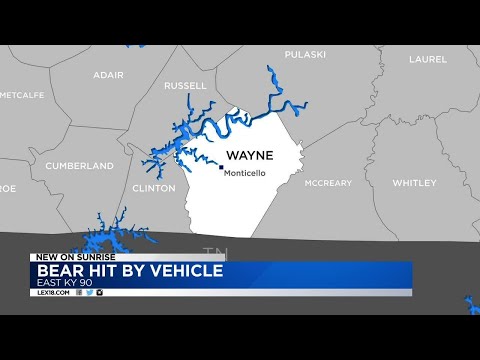 For more infomation >> Bear Hit By Vehicle - Duration: 0:26.
  For more infomation >> Tri-Valley Student Arrested After Having Four Guns In Vehicle - Duration: 0:34.
  For more infomation >> Vehicle Repair Bills - Duration: 1:11.
  For more infomation >> An online company is helping you make money with your vehicle in a brand new way - Duration: 3:41.
  For more infomation >> Jaguar I-PACE | AVAS (Acoustic Vehicle Alert System) - Duration: 2:11.
From startups to tech giants, home appliances to self-driving cars, the internet of things
and automation are the tech industry's next revolution.
With more research and opportunities than ever, the demand for STEM innovators with
imagination continues to grow.
We, the next generation of developers, designers, analysts, and engineers, are ready to make
an impact.
As a group of high school students, we're working to hone our programming skills by
working on one of these ventures: the autonomous car.
Our program focuses on providing a unique industry-like experience with an emphasis
on self-directed learning: we work together to plan, prioritize, research, and execute
stages of development, with assistance from advisors only when sought.
Most students choose to participate in the first year program where they develop a product
of their own choosing, mastering essential methodology and teamwork skills.
This timeline encourages the consistent improvement of knowledge, while also catering to individual
skill levels.
Because of our large team, division of labor is a critical aspect of the development process.
To make efficient use of our limited budget and resources, we only use a single low cost
modified remote controlled car and rely heavily on simulation software for development.
By utilizing an extensive abstraction layer, our team is able to test and make changes
even without access to the car.
This also allows for dissimilar hardware, opening multiple opportunities for other designs
in the future.
Last year, we tested different approaches to pedestrian detection, culminating in a
refined image recognition program that could distinguish moving humans from other objects.
We've expanded that code to identify stop signs and other road indicators.
To do this, parameters filter out shapes that could be a sign, before color blobs are identified
within those frames.
If the object is a match, it triggers braking.
We started this year with a basic approach to steering, leaving more advanced technologies,
such as neural networks, for future years.
Using computer vision, the program finds lanes to the left and right of the frame, and takes
the average of pixels along each horizontal axis to get the midpoints.
Average the midpoints for a steer point, and then calculate the steering angle.
After some performance tweaking and final bug fixes, it was time for our presentation
at Portland State University.
We presented on our process, progress, and then, with our fingers crossed, started our
demo.
Although the road was a little too narrow, the car stayed on course.
Our audience was pleasantly impressed, while we were ecstatic.
Our success paved the way to the next milepost - AutoSens: an autonomous vehicle conference hosted at
Brussels's AutoWorld museum.
This experience provided a rare opportunity for us to connect with the industry–never
before had university or graduate students been invited, let alone high schoolers.
We couldn't wait to show our work.
Once we arrived at the museum, we got to work amongst the past, present, and future of the
automotive industry.
After we set up a track, adjusted the tuning, and performed some upgrades, we watched as
our car drove around on its own.
Over the course of two days, we engaged with experts and industry leaders, discussing our
project and product while answering questions.
On the final day we presented to a room full of executives and engineers, showcasing our
video and hosting a Q&A about the experience.
To our surprise, we beat out over 25 other company and university initiatives at the
conference for the overall first place award, while earning a silver award for Best Outreach
Project.
Our alumni have gained valuable experience within the program, applicable not only to future endeavors in technology, but every industry.
Thousands of students don't get the opportunities we've had.
That's why we're seeking to enable motivated students by creating and marketing a low-cost,
customizable self-driving car kit.
With your help, we're hoping to put this kit in the hands of students across the world.
We're excited to be empowering the next generation of do-ers.
You can too.

Đăng ký:
Đăng Nhận xét (Atom)
Không có nhận xét nào:
Đăng nhận xét