-------------------------------------------
Botham Jean's Family Files Suit Against Former Dallas Officer - Duration: 3:03. For more infomation >> Botham Jean's Family Files Suit Against Former Dallas Officer - Duration: 3:03.
 -------------------------------------------
Family sues Round Rock ISD for $6M after 4-year-old left outside - Duration: 2:19. For more infomation >> Family sues Round Rock ISD for $6M after 4-year-old left outside - Duration: 2:19.
 -------------------------------------------
Cesar Sayoc 'Found A Father In Trump', Family Attorney Tells Anderson Cooper - Duration: 3:01. For more infomation >> Cesar Sayoc 'Found A Father In Trump', Family Attorney Tells Anderson Cooper - Duration: 3:01.
 -------------------------------------------
Los Angeles family cheers for Red Sox from West Coast - Duration: 2:55. For more infomation >> Los Angeles family cheers for Red Sox from West Coast - Duration: 2:55.
 -------------------------------------------
South Jersey Family Warning About Dangers Of Candles After Halloween Accident - Duration: 2:58. For more infomation >> South Jersey Family Warning About Dangers Of Candles After Halloween Accident - Duration: 2:58.
 -------------------------------------------
Mama's Family - Eunice Can't Sing - Duration: 1:25.
I've seen better hair on a dime store dummy.
Oh, I was wondering where you bought your clothes.
All right, now neither one of you is going to set the fashion world on its ears.
So, why don't you just knock it off?
Listen, bottom line here is that this is my wedding and you are not going to sing.
I have been practicing "Oh Promise Me" for two solid weeks and I promise you, that I am going to sing it.
Well, who is going to accompany you? Because I can promise you, it will not be me.
Well, who needs you? An organ grinder makes better music than you do!
That's because he has a better monkey than I do!
That is just about enough! This is my house and I say there ain't going to be no damn singing!
Well all right!
All I was trying to do was lend this crummy affair some class.
All you ever wanted to do was be the center of attention. Oh honestly Eunice, don't you ever give up?
You're just jealous because my husband doesn't run around with other women.
Course not, who'd want him?!
You take that back!
Damn it Eunice, I have had enough! You've ruined everybody's evening, now why don't you just quit while you're ahead!
Oh, I see! Since I ruin everything, why don't I just not show up tomorrow, huh?
Well, if you're not going to be here then there's no reason for me to stay away.
Well, if me not being here means that you are going to be here then I am going to be here whether I want to or not!
Well, I'm going to be here!
Well, then I will see you!
I guess you will!
-------------------------------------------
Ex-DHS staffer says he quit over Trump administration's handling of family separation policy - Duration: 3:57. For more infomation >> Ex-DHS staffer says he quit over Trump administration's handling of family separation policy - Duration: 3:57.
 -------------------------------------------
Newborn Amy give birth so cute & get warm family | Amy get love & care from mom | Monkey Daily 1987 - Duration: 10:44.
-------------------------------------------
Highland Park family's home destroyed in second arson this week - Duration: 2:47. For more infomation >> Highland Park family's home destroyed in second arson this week - Duration: 2:47.
 -------------------------------------------
Royal Family News_Meghan Markle,The Duchess has to pack this item now she's a royal - Duration: 2:35.
royal family news
meagan Markel the duchess has to pack this item now she's a royal for a sad
reason Megan Markel and her husband Prince Harry are currently enjoying
their first royal tour as a couple in Australia New Zealand Tonga and Fiji
there is one thing Megan will definitely have packed Megan Markel became a member
of the royal family in May 2018 when she married Prince Harry now she is a royal
the Duchess of Sussex will have to make sure she always packs one thing in
particular when she travels Megan and Harry are currently in Australia having
visited Tonga and Fiji on the Royal tour and will head off to New Zealand next
throughout her travels Megan will have to take a black mourning
outfit with her dothis fashioned requirement is unrelated to style but is
in fact for a very sad reason Megan will need a black outfit in case a member of
the royal family dies while she is traveling this means they can then be
seen to show their respects and be in mourning on the day it happens this rule
applies to all members of the royal family so they are fully prepared with
the appropriate attire queen elizabeth ii once had a rather unfortunate
incident when she did not have suitable clothing while on a royal tour the event
was particularly sad as the death was that of her father King George the sixth
in 1952 . the young then princess was in Kenya with her husband Prince Philip
when she was informed due to the suddenness of the Kings death Elizabeth
had no morning outfit with her for when she returned to London as the leader of
the country the Royal Family's solution to the dilemma was for her to remain on
the plane after it landed back in the UK a black mourning dress was then brought
to her so she could change into it before appearing before the public this
requirement for black clothing isn't the only royal rule regarding travel abroad
Queen Elizabeth and Kate Middleton's luggage tags are color-coded to make
them easy to sort for their royal entourage the Queen has yellow labels
marked the Queen whilst Kate's are also in yellow Prince William has red tags
whilst Prince George has blue tags both different from the female members of the
royal family meagan Markel has recently revealed her
top tip for fighting jet lag while traveling h megan told a local while
visiting bondi beach in australia with harry that she practices yoga to help
with the jet lag she revealed that she gets up at 4.30 a.m. for a yoga session
to give her the energy she needs for the day thanks for watching please subscribe
and support this channel
-------------------------------------------
Royal Family News_Meghan Markle's father appeals to Palace in bid to heal royal rift - Duration: 4:49.
Royal Family News_Meghan Markle's father appeals to Palace in bid to heal royal rift
-------------------------------------------
Family of Botham Jean sues Amber Guyger - Duration: 0:28. For more infomation >> Family of Botham Jean sues Amber Guyger - Duration: 0:28.
 -------------------------------------------
Learn Colors With Radio ! Funny Finger Family Nursery Rhymes ! 4k Best 2019 #Toys for kids videos - Duration: 1:40.
-------------------------------------------
Swan family nest,nestlings. - Duration: 4:48. For more infomation >> Swan family nest,nestlings. - Duration: 4:48.
 -------------------------------------------
Meghan Markle thanks Australia and Invictus Games family in touching speech supporting Prince Harry - Duration: 5:01.
Meghan Markle took centre stage in Australia at the Invictus Games closing ceremony
The Duchess of Sussex, who looked sensational in an Antonio Berardi dress, joined husband Prince Harry at the emotional event and gave a heartwarming speech
As well as thanking the crowd for welcoming her into the Invictus Games family, she also said it was honour to be supporting her husband
Meghan's full speech read: "It is such an honour to be here tonight, celebrating all of you and supporting my husband in the Invictus Games which he founded four years ago
Top Stories The Duchess of Sussex oozes Hollywood glamour as she stuns in green Antonio Berardi dress Prince Harry and Meghan Markle's plane is forced to abort landing in Sydney "In that short span of time, the Games have evolved into an international platform of some of the best athletics and sportsmanship you could ever witness, coupled with the camaraderie and close-knit sense of community which can only be defined as the Invictus Spirit
"With that said and on a very personal note, I just wanted to thank all of you for welcoming me into the Invictus Family
"I am truly so grateful to be a part of this with each and every one of you, and I'm not sure if many of you know this, but a few years ago before I met my husband, I had the incredible honour of meeting troops deployed all over the world from the UK, Afghanistan and several other countries
"In travelling to these military bases, I was given a very special glimpse into the lives of those who serve our countries
I was able to see the unshakeable bond between servicemen and women on the ground together, but at the same time to feel the palpable longing for family and friends while deployed
Once home, the need for that anchor of support from loved ones, especially given how much it accelerates recovery and rebilltation is immeasurable
I've been reminded of those memories here. Most Popular Stand Up To Cancer 2018: Fans in meltdown over Liam and Louis on Gogglebox Lucy Mecklenburgh and Ryan Thomas put on a united front Stand Up For Cancer viewers fuming as Channel 4 wrongly tweet DEATH of Michael Buble's son Noah "During this year's Games in Sydney, I have witnessed the most amazing support networks that surround competitors, and I've had the privilege of meeting several of these family and friends
The Novack family from Chicago is a prime example of this very thing. "When their son, Ryan, suffered a severe injury leaving him paralysed from the waist down, doctors said he would never be able to walk again, but after speaking to his mum, Kerry, it was clear that it was through Ryan's strength of spirit and with the unwaivering support of his parents that he was able to prove all of those doctors wrong
"Not only has Ryan competed in sailing, swimming and athletics this week, but when Harry and I saw him at the finish line of the sailing competition, he literally jumped into our boat, with dexterity and ease by the way, to give both of us a hug
"Seeing Ryan's mum on the water that day, waving a flag to cheer him on was a moment I will never forget
The support system on the ground here in Invictus is something unlike any other because it's not just cheering on your own, but realising that by the end of this week, your own becomes everyone in the Invictus Family
"It was, after all, only within 24 hours of meeting other families at the Games that another competitor's little girl was calling Kerry Aunty Kerry
This is what the Invictus Family is all about. "On that note, I would like to invite everyone to please join me in a huge round of applause to thank all of the friends and family who have helped make these Games possible
" Top Stories Meghan Markle goes smart-casual in Scanlan Theodore for the Invictus Games Why Kate Middleton and Prince William will not be Meghan and Harry's baby's godparents Meghan Markle hints at baby's due date with symbolic rings on royal tour
-------------------------------------------
Man killed in fire after saving his family - Duration: 1:55. For more infomation >> Man killed in fire after saving his family - Duration: 1:55.
 -------------------------------------------
Family Orientation 2018 - Staying Well at UChicago - Duration: 52:55.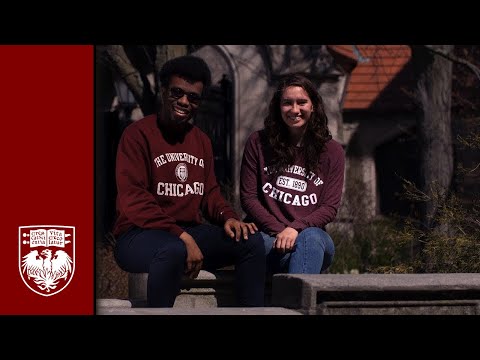
PRESENTER 1: During your time at UChicago,
whether you are a college or a graduate student,
it is important to take a holistic approach taking
care of yourself.
PRESENTER 2: You don't have to do it alone.
Student Health and Counseling Services
offers the resources and services to help.
PRESENTER 1: Let's explore some of those now.
Student health services is where you would go for care
when you're sick or injured.
But they have so many other services.
PRESENTER 2: Yeah, like gynecological services.
JENNIFER CONNOR: And we provide pap tests, sexually
transmitted infection screening, HPV vaccinations,
and contraceptive consultations.
And we provide routine physical exams, PrEP therapy, travel
immunizations, sports medicine care,
and we even provide crutches.
PRESENTER 2: I didn't know you offered so many services.
That's impressive.
PRESENTER 1: There's so much more
to explore at Student Health Service.
But first we need to head over to the other units of SHCS.
[MUSIC PLAYING]
Student Counseling Services is where
you would go for mental health care, like therapy, support
groups, and more.
Your visits here are confidential.
PRESENTER 2: What does confidential mean?
PRESENTER 1: That means that apart from authorized Student
Health staffs, no one has access to your counseling files.
They won't go on your academic record,
and no one even needs to know that you visited SCS
without your permission.
ADIA GOODEN: We also have counselors
who are specially trained to help students with alcohol,
substance misuse, eating disorders, LGBTQ concerns,
couples counseling, and more.
GIOVANNA RIVANO-GOMEZ: We have helpful programs,
like the Academic Skills Assessment
Program and Let's Talk, which offers informal drop
in consultations with a counselor at various locations
on campus.
PRESENTER 2: Also, you don't have to be in crisis
to make an appointment with SCS.
Students are encouraged to visit for any issue they
may be facing, whether it seems big or small.
PRESENTER 1: Very cool.
I wish we could stay, but there are still
more resources to see.
So where are we going now?
PRESENTER 2: We're going to the Student Health Insurance
Office.
PRESENTER 1: What?
Insurance-- all that paperwork.
Oh no, why would you bring me here?
PRESENTER 2: I know insurance can seem overwhelming,
but it's really not that bad.
And the student insurance staff are here to help.
PRESENTER 3: We are the on-campus representatives
of UnitedHealthcare StudentResources,
here to offer you guidance and assistance
with your U-SHIP ship coverage.
PRESENTER 1: Really?
Wow, I didn't know there was someone on campus to help.
I should really start reading the e-mails your office sends.
PRESENTER 2: Rookie mistake.
Here's some advice, always read the e-mails
that Student Insurance sends and pay attention to the deadlines.
If you need help deciphering things,
call one of the coordinators.
PRESENTER 3: Please do.
We're always glad to help.
PRESENTER 1: OK.
Yeah.
I can do that.
PRESENTER 2: I'm so glad you finally understand
the importance of insurance.
But there are so many more resources to see,
so we have to go now.
Bye, and thank you so much for your time.
PRESENTER 1: Hey, I know where we are.
This is the Health Promotion and Wellness Office.
They do public health initiatives on campus.
PRESENTER 2: In my house, the WellCzars and Peer Health
Advocates reduced the risk of sexually transmitted disease
and unwanted pregnancy.
PRESENTER 1: How?
PRESENTER 2: They provide safer sex resources,
present sexual health workshops, and train the WellCzars
on where to refer their classmates if they need help.
JULIE EDWARDS: That's a great example.
We actually reduce risks on campus
by training the UChicago community
in how to respond to signs of mental illness.
And then we provide alcohol education
on how to plan safe events on campus.
PRESENTER 2: But how do you promote balance?
JULIE EDWARDS: Well, we promote balance
by focusing on the 7 Key Facets of Wellness.
And then we link students to the resources, the events,
and the programs on campus that actually help develop
and maintain those facets.
PRESENTER 1: Yeah.
I build physical wellness by attending
weekly yoga, my emotional almost by practicing mindfulness,
my social wellness at Uncommon Nights.
And I explore multiple facets of wellness
by attending Wellapalooza.
PRESENTER 2: I'm impressed.
How do you find time for all of that?
PRESENTER 1: Well, it's not easy.
But I make time because I understand how important it
is to take care of yourself.
And with all the student health and counseling resources
available on campus, it's not hard to find help.
PRESENTER 2: You're right.
Why doesn't everyone know this?
PRESENTER 1: I don't know.
Let's tell them now.
PRESENTER 2: Hey, UChicago.
Whether you spend all day in a lab
or in the library poring over texts,
or in the field collecting data, we want to be successful.
PRESENTER 1: Success starts with taking care of yourself.
Student Health and Counseling Services
is here to support and guide you through this process.
[MUSIC PLAYING]
[VOCALIZING]
MARIUS COMMODORE: OK, let's get down
to some of the nitty-gritties.
So first of all, of our services are
funded through what's called a student life fee.
The student life fee is the only source
of revenue for our Student Health Service, Counseling
Service, and Health Promotions and Wellness Service.
The advantage to that is it means
that, certainly in the case of counseling and health
promotion and wellness, those services
are entirely free for students.
At the Student Health Service, it
means that 90% of everything we do
is completely free for students.
And I can certainly talk about what
isn't in those distinctions.
So essentially, the student life fee
pays for the stuff on the left.
And, by the way, there is actually a guide--
that we put at the front, which actually
might be helpful to reference.
So the covered services are on page 3.
So the services that are covered are essentially
on the left side of the page.
And on the right side of the page
are the services that are not.
So important things that are not,
pharmacy prescriptions would be billed to your insurance as
per routine.
Emergency care, as per routine, subspecialties
services, as per routine, EKGs, the cost of hospitalization,
so on and so forth.
All of those things will be billed
to insurance as per routine.
However, there is no cost to just come see us
at the Student Health Service.
So if a student is sick, I always
tell them the best place to start
is the Student Health Service.
If we can't take care of it, we'll
certainly try and figure out a way
to get you to the place that can take care of it.
Costs of care are very important.
And we're trying to be much more transparent and open
with students about the costs of getting care.
I've only been here about two years,
but one of the things that I think I have found
is that so many of our students, it is the anxiety of illness
and not the illness itself--
that drives so much of their behavior.
And sometimes their behavior can occur without any thought
about costs.
So we like to remind them--
and by extension, you--
about the costs of some of those care.
At the left side of this graph are
things like the Student Health Clinic, which I said.
There there's no bill for the physician visit.
You come in, you see us, we're never
going to bill you for that.
We have a 24-hour nurse line which
is available 24 hours a day.
So many times, students need a little bit
of triaging, in terms of, is what
I'm dealing with something that is emergent, maybe urgent,
or something in between?
And so the nurse line is available all the time
at no cost to students.
HealthiestYou is a part of the UnitedHealthcare Student Health
Insurance Program.
So it is a telemedicine app-based service,
so that you can use the app to communicate with a physician
24 hours a day.
However, if your student does not have the United Student
Health Insurance Plan, and has a commercial plan
maybe under a family plan, many of the commercial plans
already have some kind of telemedicine service.
So I would urge you to work with your student
to talk to them about telemedicine options which
may already be available to them, usually at no extra cost
through their plan.
There are a couple of what we would call convenience care
clinics, here at Hyde Park.
Convenience care clinics would be like your CVS Minute Clinic,
or whatever sort of is the Walgreen's version.
So those are obviously more expensive than what
I've just told you about.
However, certainly not as expensive as an urgent care
center.
There are, oddly, no urgent care centers here in Hyde Park.
The closest urgent care center is called South Loop Urgent
Care.
It is in the South Loop, obviously.
And then there are a bunch of them downtown.
Many of them are associated with Northwestern Medicine.
However, Northwestern Medicine is in network,
both for our University health insurance plan
and most of the big commercial carriers.
After that, the price just goes way up.
The emergency room is not a terrible place to be seen.
I've been seen in an emergency room a couple of times.
However, it's a very costly way of finding out
that you have constipation.
And that's a long story, which I'm happy to share,
should you ever be interested.
My point being that the emergency room
is appropriate in some cases.
However, we would like to try and dissuade our students
from going there out of a sense of urgency
as opposed to a sense of actual medical need.
And so we like to give many, many services which
we can use to help the students triage whatever
their concern might be.
The numbers to the Student Health Service and Counseling
Service and HPW are, I think, on the final panel
of your booklet.
We are conveniently located.
Student Health Service is at 59th and Maryland, which
is near the medical campus.
Our HPW colleagues are located at 61st and Ellis.
Is that behind the-- that's not the law school.
JULIE EDWARDS: It's behind SSA.
MARIUS COMMODORE: It's behind the School of Social Service
Administration.
And then the Student Counseling Service
is right up the street at Woodlawn and 56th Street.
So they are all here on campus.
It does take a little bit of walking, however.
We aren't the most massive campus in the world.
The point is we're all available here on campus.
I am the source of all good things from the Student Health
Service, but I figured I might as well put up
some of the pictures of my minions, just
to show you that I like to give a little bit of credit
to the lesser beings, OK?
I say that to say that I am actually
the least experienced member of our staff.
Most of our staff have served something like 10 to 15 years
on the low end.
And we just had two of our staff members
celebrate 30 years in student health.
Student health is-- it's not the easiest place
to work for a number of reasons.
And I can tell you that the people who are doing it
do it because they love taking care of students.
They know the stresses that students undergo.
They know what it's like for students to be far from home.
And they do this out of love.
They sure as heck don't do it for the money,
but that's a whole other story, OK?
Some of our services, I can describe.
Were open Monday through Friday, 8:00 to 6:00.
And then we're open on selected Saturday mornings
during the three main quarters, Fall, Winter,
and Spring for urgent matters.
So if you wake up on Saturday, and you're sick,
you can come to student health.
However, we don't take routine matters on Saturday mornings.
Now of course, you don't have to be
sick to come to Student Health.
If you want a physical, you should come on in.
If you know you're going to be traveling later in the year
and you need travel vaccines, have your student come on in.
After all, once we give you the vaccine, it's yours to keep,
as I like to say.
So encourage your students to think ahead
and come on in if they need it.
If your student has chronic conditions, please
have them come in and establish care.
They may not necessarily need anything from us.
Certainly, if you have chronic conditions,
and we have many more students who are lymphoma
survivors, transplants, have had stem cell or organ transplants.
So we have students who come with real condit--
with real illness.
At least if you establish with us early on,
then we can help facilitate your referrals, or finding care.
Our medical center is excellent, but there are also
two or three other very excellent medical centers
here in city.
We do a lot of medical triage.
We have some women's care experts.
We do PrEP therapy for HIV prevention.
We have a stand-alone sexually transmitted infection testing
clinic.
I know that's not what any of you want to think about,
but I can tell you that our number one
lab spend is testing for sexually
transmitted infections, OK?
So this is a reality of life.
And so I am the one who personally
looks over every single test.
I personally inform everybody who has a positive test.
And I personally make sure that everyone gets the treatment
that they need.
So this is a reality and we've tried
to make it as seamless and easy for students as possible.
We also have a number of interpretation services.
Some physical interpreters are available,
but we also have a fairly good video interpretation
service for people for who--
there is, because I like to say there's English
and then there's medical English.
And they're not always the same.
Many family members often have these questions.
I'll go through them in order because I
think they're important.
Can I get information about my child's care?
Yes, if you have had a release signed by them.
If you sign a release and you lodge it
with the Student Health Center.
Can you sign a release now?
The answer is no, mostly because I don't want to be responsible
for all those forms, OK?
However, we can direct you on our website
to where you can get the release.
And then your student can bring in the release
and have it registered at the Student Health Service
with no problem.
What happens in an emergency?
The answer is, it depends.
And I promise you that I will get back to that.
And I'm not going to answer it right now.
I actually think that it's worthy of some discussion.
So I'm going to leave that to the end,
after my colleagues present.
Where can they get help after hours and on weekends?
So after hours they can get help through
our telemedicine service.
They can get help through the nurse triage.
They can get help at some of the convenience
care clinics, which are often open until 9:00 or 10:00.
Many urgent cares are open later than that.
And then, of course, if necessary, the emergency room.
But like I said, many students are better
served by calling the nurse triage
and getting some preliminary advice
before making further steps.
And then who can I contact if I need help with an issue?
That answer is me.
I am happy to field phone calls and emails directly.
If you send me an email or a phone call
within the first four weeks of the quarter,
I will be late getting back to you.
It is a very, very busy time of year.
But I answer every phone call.
I answer every phone call and I answer every email.
So please don't think that I'm ignoring you or blowing you
off.
Most of the time it's I'm trying to figure out
what is the issue so that I can get back to you
with information.
I have cards that have my email address
as well as my office phone number on it.
So if you would like that, I'm happy to give those to you.
Our Student Counseling Service is another arm of--
of the Student Health and Counseling Services.
The Student Counseling Service, you know,
our director, Dave Albert, likes to say that there
is no problem too small.
So many of your students will be staying--
will be away from home for the first time ever.
That in and of itself can be stressful.
The University of Chicago prides itself
on being academically rigorous, as President Zimmer
likes to say.
What that means is the and crush your spirit to the size
of a walnut, all right?
That's not really true.
But my point is academic rigor comes
with a certain set of intrinsic stress
which they may not have been exposed to before.
Particularly because each of your students
is first or second in their class, right?
Everyone here is first or second in somebody's class.
And so guess what?
Someone ends up having to be last in class.
And that by itself can be kind of a toxic mix for a student.
So they like to say, no problem is too small.
Many of the counselors are generalists,
but a number of them also have specialty expertise
in substance use, in LGBTQ concerns,
in adjustment problems.
So they have a really good multidisciplinary team.
And I guess the most important thing for all of you to know
is that there is a Student Counseling Service.
So many students kind of suffer here in silence
because they don't know, or they are afraid to go.
The point is there is a Student Counseling Service.
They take walk-ins.
So if they went in on Monday morning at 9:45,
they would be seated in the waiting room
and someone would see them within the hour.
So the point is, if your student needs help, please
encourage them to seek help from the Student Counseling Service.
They have a couple of important programs
that I wanted to highlight.
One is the Academic Skills Assessment Program.
ASAP is a kind of nice multidisciplinary service.
Some students may have had learning differences
or learning disabilities, but they were smart enough
to make it through high school.
And then they get here and then all of a sudden, the learning
difference which may not have caused as much problem
before causes a problem now.
ASAP is very good at helping to tease that out.
Sometimes kids are depressed and they
are interpreting their depression
as a lack of intelligence and an inability to cope,
an inability to hack it.
ASAP is very good at teasing that out.
So our Academic Skills Assessment Program
is very good at helping to make some of these nuanced--
some of these nuanced decisions.
There is a satellite walk-in therapy
service called Let's Talk.
So some students don't actually like
going to the student counseling building.
They feel uncomfortable because it's not like anybody ever
goes in there because they're looking for directions, right?
So sometimes students think that, oh my god,
if I go up to student counseling, everyone will know.
So the Student Counseling Service
has a lot of satellite walk-in services,
where you can sit down.
You don't have to give your name.
You don't have to give what school you are.
You can talk with a counselor for about an hour.
And talk through with the counselor
whether or not they should--
you need to escalate your conversation to the next
to the next level.
Something like 60% of Let's Talk contacts
results in actual referrals to the Student Counseling Service.
So sometimes the student just needs to know,
is what I'm dealing with actually something
worthy of student counseling?
And the answer is invariably, yes.
As I said, there is no problem too small.
The Student Counseling Service provides consultation
to faculty.
Many of our faculty are the first to notice that something
is awry with a student.
And so we will be helpful to faculty
in helping them think through how they might approach
the student about getting help.
Now once a student comes to us, we
are not allowed to share with the faculty,
with the dean's office, with anyone, that they actually
came to the Student Counseling Service.
But we do think it is useful to our faculty
to help them navigate and negotiate the thicket of,
how do I help a student get to help?
The service standard is no waiting list.
Last year, I think every student who
called a got an appointment at Student Counseling
within five days-- within five days.
And the consequence of that, however,
is that if a student needs much longer-term therapy,
they are often referred to someone in the community.
We can also talk a little bit later
about how that process might actually work.
For the purposes of time, I didn't want to necessarily go
through that nitty-gritty.
But the point is, if a student needs
a short-course psychotherapy, they'll do it in-house.
We have psychiatrists who are in-house
and can carry students throughout their time here.
So we can talk about that a little bit more.
The numbers to the Student Counseling Service
are in the booklet as well.
But once again, like I said, the whole point
is knowing there is a Student Counseling Service.
Your student does not have suffer in silence on their own.
I'd like to turn it over to my colleague Julie Edwards to talk
about our Health Promotion And Wellness unit
as well as our student insurance, which I'm always
happy to not have to talk about.
JULIE EDWARDS: Good morning, everyone.
Thank you for joining us today.
So as Marius mentioned, I'm going
to be talking about Health Promotion and Wellness.
And in the video, you saw the Facets of Wellness framework.
And what we try to do is look at things
from a preventative approach.
So obviously, within Student Health,
if students have a medical need and they are sick
and they need to seek care, then they
would go to Student Health.
The same with Student Counseling.
If they have something that they'd
like to speak with a therapist about,
they're able to do so within student counseling.
What we do is we try to provide programming, events,
and resources on campus that can really
help students reduce stress and anxiety through multiple ways.
And so I'm going to go into some of those in more detail now.
We have a few large-scale events that we host on campus.
The first being Wellapalooza, is what we call it.
And we have about 40 different campus partners
as well as community agencies who come to campus.
There's interactive activities for students,
but it's really just to allow students to really link
with different resources that are available to them.
This campus is a huge campus and sometimes a bit decentralized.
And so sometimes it's difficult for students
to know all of the resources that are available.
So we try to utilize Wellapalooza as that.
It's held in Autumn quarter and then also in Spring quarter.
Then we offer something called Pet Love, where
we bring certified therapy dogs on campus.
They're typically during reading period,
so that when it's a higher stress time
and students are actually preparing for finals,
they can come and we bring about five to 10 dogs--
it depends on the day.
But we have an agency that we work with
so that students can participate in that.
We also hold Stress Relief Days, where
we have different activities that are happening.
We provide snacks and just a way for students
to connect with one another and also
take a break from studying.
Sometimes they don't understand that that's important, too.
And so we really want to encourage
them to take a break sometimes so that they
can engage with their peers.
And then lastly, there is something called Study
at The Arts.
We partner with Logan, with the different art
centers on campus, where they actually
open the doors so that students can all go in there
and actually study.
But then there's also different snacks, activities for them
to do, and this is typically during finals week.
So these are just some of the large-scale events that
are open to all students, undergrad and graduate,
so I just wanted to make sure that you are aware of those.
We also have several programs or trainings
that we offer on campus.
The first I have listed here is called Mental Health First Aid.
This is an eight-hour certification class
that we actually train individuals
on how to identify the signs and symptoms of mental health
issues.
How do you have a conversation with someone
you're concerned about?
And then refer them to the appropriate resources
on campus.
We used to only train our staff and faculty,
but our data, when we survey students,
shows that students go to one another first, sometimes,
before they go to professionals.
And so we really want students to understand,
how do I have a conversation with someone
I'm concerned about?
And then how do I refer them to the appropriate resources?
These trainings, we're actually offering two student trainings
per quarter this year.
And so October 13 and October 20 are
the two dates for this quarter, if your student is interested.
We also offer Mindfulness Meditation classes.
And we offer for four-week sessions per quarter.
These typically fill up very quickly
because we are limited to 15 students per session.
And so if your student would be interested in that,
I encourage you to have them go to our web site,
wellness.UChicago.edu to sign up for one of those courses.
But we do offer them each quarter
in four different sessions.
And then Refresh Sleep is an online sleep program where we
actually send information out.
It's just an online program.
So for seven weeks, students will receive one email
from us per week, where it has the data of why sleep
is important, and how you can make your environment more
conducive to sleep, and the resources on campus
that can also help.
And so we average about 500 students per quarter
that participate in this.
And I also think it's because it's an email based program,
and so it's a less hands-on for students.
And so it's a bit easier for them to participate in.
A few of our other programs, something new
that we're offering this year is called Wellness Coaching.
And so as Marius mentioned, sometimes there
might be issues that students are experiencing,
and they just want to speak with someone to see,
is this something that I need to seek counseling services?
For the wellness coaching, we will
use our facets of wellness framework for students
to fill out an assessment to show maybe areas that they
would like to focus on, whether it's nutrition,
whether it's sleep, a wide variety of aspects.
And then they actually complete a strengths assessment.
And then they meet with one of our health educators
so that she can go over what their strengths are.
And the students actually develop some goals
for an action plan of what they'd
like to try and accomplish, whether it's in the next month,
or what in the quarter, or however long.
They can meet with her as long as they would like.
We've already had, I believe, seven students now
who have gone--
or at least started the process.
So some are meeting with her on a monthly basis,
others are doing it on a weekly.
So it's really up to students to decide.
But it's a program that we're really pleased that we're
able to offer to students.
BASICS is something that it's called Brief Alcohol
Intervention-- or Brief Alcohol Screening
and Intervention for College Students.
So if a student is just concerned maybe
about their own behavior, or about someone else's,
as far as alcohol and other drugs,
they're able to take an assessment
and we meet with one of our health educators.
When they complete that assessment,
then they can see how they compare to their peers,
in either their habits or their peers habits.
And then she helps them through a motivational interviewing
process to help them create some goals and strategies that they
would like to achieve, if they so choose.
It's really based on the students
and what they would like to be able to achieve in the future.
And then lastly, we offer something
called 21st Birthdays.
And so we actually just send an email
to any students who are turning 21, and giving them
alcohol-free events that are available on campus,
as well as safe strategies for those who do choose to drink
during their birthdays.
But they receive a certificate from us.
We partner with UChicago Dining, so they can go to a coffee shop
and receive a free cup of coffee.
So that's just something else that we
offer as far as programs.
And then we do a wide variety of workshops.
So this just shows some of the different topics.
Financial wellness, stress and time management,
sleep health, alcohol and other drugs, also self-care
and the importance of it.
So we do cover those and those are available by request.
And then we will offer some of those throughout each quarter.
And then we also engage students.
We have five paid workers in our department.
And then we also have many volunteers.
We have a Peer Health Advocate program
that we train the peer health advocates in how
to deliver messages on campus.
And so they'll be in housing providing workshops
and they really educate their peers.
The WellCzars are a resource that--
they are elected within the houses.
So that if students have a question or a concern
about anything regarding Student Health and Counseling Services,
the WellCzars are the liaison and they can reach out
to their WellCzar.
Student Health Advisory Board, Marius already mentioned.
And then we also have a Wellness Advisory Board.
And it's really just a grassroots effort
on how can we make our environment here
at UChicago a healthier one?
And how can we support students well-being?
So those are some of the aspects.
Our Better Together resource is something that we have
that students can see on campus.
And we also have a website and a Facebook page,
where we link them to different resources
to connect with other students.
And then we offer a listserv which gives out weekly emails
about things happening all across campus called
BustMyStress.
We have a Health Promotion and Wellness newsletter.
We offer free sexual health supplies, such as condoms.
We have eCHECKUP to Go, which is an alcohol screening
program that I mentioned.
All of your students as first-years,
completed AlcoholEdu before they came.
And so our department manages that.
We also have Stress Kits that students
can rent in our office.
And so they have Play-Doh, origami, a lot
of things that they do typically around midterms or finals.
And so they can use it for study breaks.
And then we have Kognito is something new as well.
That was another online education
that was required this year for all-first year students.
So it's how to recognize concerns in your friends
and how to get them the resources that they need.
So those are some of the offerings
that we have in Health Promotion and Wellness.
And now I'm going to switch hats and I'll
talk a bit about student insurance,
and then I'll turn it over to Charnessa.
So we hope you all know that health insurance is
mandatory for all students here at UChicago.
As Marius had mentioned, the Student Life Fee
covers many of the services within our areas.
But then the health insurance supplements
if a student needs to have prescriptions
or if they need to seek outside care as well.
If a student wants to participate on the university
student health insurance plan, they can enroll right now
and I'll give you the deadline in a moment.
The coverage actually starts September 1,
and then it goes through August 31.
So if a student signs up today, the coverage is retroactive.
So if they did have bills, they could submit them for payment
as well, because it does start September 1.
The deadline to waive or enroll in the plan is October 19.
And I want to bring this up and just
emphasize this to all of you because students
will receive emails from the insurance office.
If they do not waive the insurance
and they already have a plan in place, and they choose not--
or they just don't take any action and do not waive,
they will be assessed the premiums,
and they will receive the U-SHIP plan.
And so I just strongly encourage you,
if you already have insurance and your students are covered,
make sure that they waive the U-SHIP plan by October 19.
If they do need coverage, U-SHIP is a phenomenal plan.
It's a platinum level plan and it provides many services
and really a lot of coverage.
It's benefits-rich, as we say.
And so that students can really receive much care here
in the city of Chicago.
The website is studentinsurance.UChicago.edu.
And if students have dependents, they
would have to provide documentation.
If they are married or if they have children,
they would have to provide that documentation
and they can add their dependents after they
have enrolled in the plan.
If you are wondering if your current insurance plan meets
the type of criteria needed for waiving,
there is a checklist on the website.
And the website and information on insurance
is also in that brochure that Marius had pointed out.
So you can look at that checklist just
to make sure prior to them waiving.
And if they need to make any changes,
so maybe the phase off of the the plan, or maybe
some employment has changed for a parent,
and so they might want to consider adding U-SHIP,
they're able to do so, but it has
to meet some of these criteria.
Whether they've aged off, if there is a marriage or divorce,
a change in an employer plan, birth or adoption of a child,
the full list is available on the website if you're curious.
And if any of those changes have been made,
you have 31 days from the date of that change
to either add or remove U-SHIP coverage.
Now Student Health serves as the primary care physicians
for the U-SHIP plan.
So if a student is on the University Student Health
Insurance Plan, they would need to first seek care
within Student Health.
And then if they needed to be referred out, they can do so.
If they do not receive that referral initially then
there would be a $50 non-referral deductible that
would be charged.
So if any of your students will be on the U-SHIP plan
I strongly encourage that they reach out to student help
so that they can establish the relationship initially.
And then if they need the referrals out, they may do so.
The premiums for students, the annual premium is $4,398.
That is billed in three installments in Autumn, Winter,
and Spring quarters.
So there will be $1,466 dollar bill on your Bursar bill.
Even though you only have three payments,
it does cover through August 31.
So sometimes there are questions about that.
And then lastly, if students would
like to elect to have dental or vision coverage,
we do offer those.
Those can be found on our website as well.
They are optional.
It's completely up to them if they choose to.
There are three options for dental, as you can see here,
and then two options for vision.
And you can see the comparisons on our website.
And they can sign up.
They would sign up directly with those insurance carriers
for that elective coverage.
So just in summary, in the video you,
saw that we have on-campus insurance representatives.
They are actually housed in the Health Promotion and Wellness
Department on 61st and Ellis.
And so I strongly encourage if students
have questions, or received a bill that they're not
sure about, they can come and speak
to the UnitedHealthcare reps.
And then our UChicago contact is Celia Bergman,
and her information is here.
And then information is also included in your brochures.
So I will turn it over now so I can give Charnessa
plenty of time.
She is the Director of Student Disabilities.
And so she will discuss that with you as well.
And then we'll open it up for questions and answers
afterwards.
CHARNESSA WARREN: Good morning, all.
As she mentioned, I am Charnessa Warren, the Director
of Student Disability Services.
So I wanted to give you a little bit of background
about our department.
We're located on the north side of campus,
actually in the parking garage.
A lot of people get confused by that.
But we're right on the corner within the parking garage.
And it's actually a nice office, it's not a garage.
So there's about seven of us who do
this work and the coordination of this work.
So I'm the director, there are two other directors.
One is a deputy director, and associate director.
We also have four different program coordinators.
So one of them being an American Sign
Language interpreter and coordinator,
who's full-time, who coordinates those services
for our students.
We also have three other coordinators,
program coordinators, who oversee
the day-to-day operations of the accommodations, in which we
provide and I'll talk a little bit about that.
But it's a very busy office.
And we keep a lot of activities going on with the coordination
of services.
And we'll talk about those in a second.
I wanted to just give you a basic definition
of what disability is, should your student need
to come forward.
A disability is a physical or mental impairment
that substantially limits a major life activity.
And so that can be anything from walking, to sleeping,
to talking, to thinking, to reading, to writing,
all of those day-to-day activities in which we--
we do on a daily basis.
If there's any kind of impairment to that,
then a student would be eligible or qualified for the services
in which our offices provides.
Now this is a little different and higher ed,
because in the K-12 setting, most institutions
are responsible for finding the students who
qualify for accommodations and then providing
those accommodations.
What's different once they get to higher ed,
because once you're in higher education,
you have to come forward.
The institution is not obligated to come and find
the students who qualify for these services.
You must come and self-disclose to our office.
So it's important that if your student meets
any of this criteria at any time,
whether it's a permanent or a temporary condition, then
they would be eligible for some services and accommodations
through our office.
So again, as I said, we provide services
to any student or any qualified student who
meets that definition that is enrolled in any program that's
sponsored by the University.
So we will support your student, again,
like I said, if it's a chronic long-term health condition,
whether it's in remission or not,
and then we will also support our-- those
temporary conditions.
So there are times when students will be playing around
and break an arm, or break a leg,
or as an athlete, a student athlete at the University,
will experience a concussion or something,
and they need some type of accommodations academically.
Then they would be ideal candidates
to come and to be referred to our office
so that we can provide them with accommodations and support.
Some of the major categories that we
see in our department our cognitive, you know,
learning disabilities.
We also see physical or mobility conditions,
that can include allergies and health, diabetes, cancer,
all of these variety of physical health conditions
that we provide accommodations for.
Vision and hearing, sensory conditions,
and then as well as psychological, mental health
conditions.
So if your student qualifies for any of these,
I have a few assignments for you all to do.
First of all, I need you to tell them that they belong.
A lot of our students, particularly the ones
with mental health issues--
I give this speech quite often when I meet with them
on a one-on-one basis.
And just reassuring them that just
because you have a condition or a disability of some sort,
and you need some accommodations,
does not mean that you do not belong here.
I ask them, did you compete to get in, just
like everybody else?
And they nod their heads, yes.
And so as long as you have competed to be in the program,
you've earned the right to be here.
Just because you made an accommodation
and need to do something a little
differently does not mean that you don't belong.
So your assignment as their parents, and my job, also,
when they come to see me, is to remind them that they do indeed
belong here.
The other thing is, another theme that I typically
give to our students is that it's natural for us
to need to accommodate from time to time.
So it's natural for me if, I can't hear you,
I'm going to lean in to hear you a little bit better,
or I'm going to ask you to turn the volume up, or something
of that sort.
Or if my eyes are a little fatigued
and I can't see something, I'm going
to bring it a little closer.
Or if it's not really just fatigued,
and I just can't see very well, I'm
going to tell myself, OK, I need to go and get some eyeglasses.
So those are natural things that we do.
And it's natural for us as humans to self-accommodate.
And so reminding our students that it
is OK to need to self-accommodate,
to accommodate in any way or in some form or fashion.
And so just reminding them that you can--
it's natural, OK?
The other thing is that it's normal.
So the same way the students get sick,
or they come up with the flu, or they
have a condition where they require counseling,
those are natural or normal things that happen to all of us
from time to time.
And so going through those, or having those moments,
or having episodes where you need to go for help
or get some support--
so it's just the same way they would
go to Student Health, Or Health and Wellness Promotion,
or Student Counseling, they can come to Student Disability
Services and get some support as well,
with the accommodations that they may need academically,
as well as in housing, for some of our students
who require specific living arrangements.
So it's normal, OK?
So the way that we typically provide the services
is through this interactive process.
We require all students to have an intake interview with us
because I like to think of them as experts
of their own experience.
So I need their perspective.
I need them to tell me, because not every disability--
a lot of people can have the exact same diagnosis.
But they experience different symptoms of that diagnosis.
So for me, it's important that we interview
them to talk to them about their own experience
and what symptoms they're actually displaying.
Then we also ask them for documentation
because we need to have something to pin our hat on,
for students to tell us and to share
with us their documentation.
And we safeguard that information
and we keep it private within our office.
And we house it there and we do not
share that with any of the faculty
or any of the instructors.
And so your students don't need to go and self-disclose
their medical documentation or reports to their faculty
members and instructors.
We do that in our shop.
And we review that documentation.
Once we've determined that they qualify
as an individual with a disability,
we've met with them, or we've reviewed their documentation,
we equip them with ADL, or an Accommodation Determination
Letter.
They are able to use that letter to be able to share
that with their instructors.
So that letter does not have their diagnosis,
it doesn't have their disability,
or anything like that.
But it will outline for the instructors
what accommodations they're eligible for while they're
here.
And then there are times where some of the accommodations
get a little tricky, or instructors have questions
about how will this play out in my class,
can the student actually miss three labs out of my class
due to a health condition?
Then we have these interactive conversations with the faculty
and with instructors about what's appropriate,
and what makes sense, and what's actually reasonable given
the parameters of the class.
And then we also provide a lot of implementation and support
for those students.
and we'll talk about a few of those
or I'll outline those in just a moment.
And then this is not a one-time shop.
It's not that you come in one time
if you need these accommodations,
they're first year, and then you can't get anything new.
Obviously, we evolve, we change, and new things come up.
And so this process starts all over again if something changes
in their condition, or if they realize
what they have right now is not working for them,
they can always come back and meet with one of the directors,
including myself.
This is just a brief list of some of the accommodations
that we typically provide.
Being testing, so time and a half
for exams, reduced distraction testing environment,
note-taking assistance for some students
who are having trouble with concentrating,
so it's difficult for them to sit and listen in class
and take notes simultaneously.
Some students with physical disabilities who cannot write
and take notes.
So sometimes we need to do note-taking assistance.
This is probably one of the bigger ones.
That and the testing categories are the ones
that keep us the most busy--
the busiest in our office because it's
a quarterly rehiring of note takers every quarter,
then hundreds of classes that students need.
And then the testing accommodations.
So there is a lot of students who
are coming in this year who have had this accommodation
on the ACT or the SAT.
And they require extra time for their exams in the program.
So we provide testing accommodations and a reduced
distraction environment.
Sometimes instructors will do it,
but for the most part, for our incoming first-year college
students, or just the college, our office
will do a lot of the coordination for those exams.
Document conversion services are for students who require
text in a different way.
So some students listen to text better rather than reading it.
And it helps with their comprehension and their pace.
And so we do a great deal--
or spend a lot of time--
I have a whole team dedicated to just breaking binders on books,
scanning them, and making sure they're an accessible
format for the students.
As I mentioned, we do have an interpreting coordinator
who will coordinate all of those services.
We do collaborate with a great number of campus partners,
like Parking, Facilities, Housing,
and all of the accommodations that students may
need within those facilities.
For students with special dining requirements,
we do work with Dining Services as well.
And then some of our trickier accommodations
that require a great deal of coordination
between multiple partners across campus
is these complex chronic health conditions.
So we might reach out to Student Counseling--
with the permission of the student, of course--
and Student Health, and talk about, OK--
what's the prognosis?
And how long do we-- and we do that.
And then sometimes students get flexibility accommodations
and things of that sort.
So we do a lot different accommodations
for our students.
Last but not least, I just wanted
to let you know that we are rolling out--
this is new this year.
When I came to the office about two years ago,
everything was paper based.
And so we were relying on paper files, or Google Spreadsheets,
or some of those kind of things.
Now we've actually-- we're going to roll, as of October 1,
the first day of class, we're going
to roll out an accommodations Accessible Information
Management system portal.
So students are now able to be able to log in, to kind of see
where we are in the process of processing their accommodation
request.
They can go in and look at a copy of their letters,
because sometimes they lose the letters that we give them.
They can go in and pull another copy down.
They can reach out to us to schedule
their exams, which happen on a quarterly basis,
find out where their exam is going to take place.
They can coordinate their note-taking services
with a note-taker.
They can go in and tell us which class they
want to have note-taking in.
So we've got a lot of robust services
within the software program.
And I'm super excited to roll it out.
But that's new and coming as of October 1.
So that's all that I have.
And I'll save all questions to the end.
MARIUS COMMODORE: What happens in an emergency?
And it really sort of depends.
And what it depends on is sort of, I would say,
the level of incapacitation.
So if you are a student under the age of 18,
then parents will be called.
Particularly if you are the next of kin or the legal guardian,
there is a legal--
you know, there's a hierarchy of people who get to be called.
For minor's, parents are at the top of that hierarchy.
So if your student is 17, then actually, that's easy.
For a student who is 18, then it really depends on two things.
One is their incapacitation.
And incapacitation takes many forms.
One-- is the asthma attack so bad
that the poor kid can't breathe?
Then we're going to call a next of kin.
Is the student actually unconscious?
And unconscious doesn't necessarily
happen because of some awful illness.
If you have been concussed because--
and this literally happened last year--
you're picking something up, and you
hit your head against the fire extinguisher,
and then hit your head a second time against the wall,
and you're on the floor.
We're going to call the emergency
contact in that situation.
If you end up in the emergency room,
then the emergency contact is who gets called.
So I would suggest that all of you
make yourselves the emergency contact for your student
because that will put you at the top of the hierarchy for who
gets called in an emergency situation of incapacitation.
However, if a student is 18 and they
are in an emergent situation, you've got to understand that--
if they can comprehend it and they are able to say,
I don't want my parents called.
Then it is unfortunate, but we have to follow that person's--
and follow that person's instruction to us,
unless there are--
so there are probably three important "unlesses".
One, imminent harm to self in a mental health crisis,
imminent harm to others in a mental health crisis,
or imminent or a quickly emergent illness.
So meningitis, for instance, is one of the circumstances.
So a person can get meningitis at 8:00 AM
and be dead by 12:00 PM.
And so that kind of place, a physician or a health care
worker can reach out to emergency contact
over the instruction of the student.
However, I would say your relationship
with your student is your best weapon in an emergency,
in making sure that you are contacted.
I can tell you that everyone in Student Health,
I have never sent anyone to the emergency room and said,
don't worry about it, your parents don't have to know.
We often tell students, please call your parents.
Is there someone we can call?
Is there someone you would like to be involved in--
is there someone you would like to be
involved with this process as we go through it?
So we try very hard to encourage our students to reach out
to parents in an emergency.
But this is the--
I mean, all of you guys know your 18-year-olds aren't--
could not be mistaken for adults.
Unfortunately, the laws of these United States
say that they are adults.
And so we have to be cautious about how we--
about how we make these decisions.
But we really, really do try to encourage our students
to involve their parents.
And then there are lots of things
other than emergency, in which we really do try and involve
them.
So when we're having discussions about--
you need to go see a subspecialist, right?
That that bill is coming to you.
So we want them to reach out to you
to make sure that you know that you know what?
That $3,000 bill really is legitimate, right?
So that's why I say what happens in an emergency really
is, it depends.
But you should know that we really
do make our best efforts to try and have parents be informed
in an emergency situation.
But make yourselves their emergency contact,
that's really important.
And also if you want to be involved
in their ongoing medical care, sign
a release of medical information because what then and tells
us is the student has given us permission to talk to you as
if we are talking to them.
However, they can rescind that release, in whole or in part,
verbally, all right?
You can imagine there are some embarrassing conditions
in which they might want you to know that they are getting
care, but they don't want you to know for what
care they are getting, OK?
Again we try and talk through them, telling them,
you know, honesty is always the best policy,
because you guys are going to get the explanation
of benefits, right?
You're going to want to know what was happening
that incurred this cost.
And so we try and encourage them to reach out
to you as much as possible.
-------------------------------------------
Inclusive Playground Family Fun with Zion! - Duration: 2:13.
Hey everyone! It's Roshini. Time for a little vlogy vlog. So recently my
husband and I took Zion to Zachary's Playground which is an inclusive
playground near my house. I didn't even know things like this existed you guys
before but I'm so happy they do now. Inclusive playgrounds allow children
with all abilities to play together and promote inclusion and social development.
This video is done in partnership with Landscape Structures which is the
company that creates the equipment for playgrounds like this nationwide.
Landscape Structures reached out to us I'm so happy they did! They believe in
inclusive play because they believe that children learn life lessons, leadership,
partnership, physical, cognitive, sensory and social skills. Not only that but Zion
had so much fun at this playground!
His favorite activity was definitely the swings although I did notice that he
really liked discovering all of the surprises on the playground. There are like
little stations everywhere. The last time we brought him he was a lot younger and
now he's older so we could see how much he really loved exploring and just
finding all of the surprises. At a regular playground Zion wouldn't be able
to fit on most of the equipment in his wheelchair so then we'd have to take him
out and then we'd have to help him play and then he would lose his independence
but, on a playground like Zachary's he can play independently and honestly I'm
just so happy to see him so happy! If you guys want more information about
playgrounds like Zachary's playgrounds nationwide visit PlayLSI.com and
thanks for watching! Bye!!
Hello.
Mommy.

Không có nhận xét nào:
Đăng nhận xét