This is a Kaiser Health News story. There seems to be no end in sight for the current partial government shutdown, the third since the beginning of the Trump administration
For the vast majority of the federal government's public health efforts, though, it's business as usual
That's because Congress has already passed five of its major appropriations bills, funding about three-fourths of the federal government, including the Department of Health and Human Services and the Department of Veterans Affairs
But seven bills are outstanding — including those that fund the Interior, Agriculture and Justice departments — and that puts the squeeze on some important health-related initiatives
The shutdown itself is not about health policies. It's the result of differences of opinion between the administration and congressional Democrats regarding Trump's so-called border wall
But it's far-reaching, nonetheless. Here's where things stand: Funding for "big-ticket" health programs is already in place, alleviating much of the shutdown's immediate potential impact
Since HHS funding is set through September, the flagship government health care programs — think Obamacare, Medicare and Medicaid — are insulated
That's also true of public health surveillance, like tracking the flu virus, a responsibility of the Centers for Disease Control and Prevention
The National Institutes of Health, which oversees major biomedical research, is also fine
It's a stark contrast to last January's shutdown, which sent home about half of HHS's staff
But some other public health operations are vulnerable because of complicated funding streams
Although the Food and Drug Administration falls under the HHS umbrella, it receives significant funding for its food safety operations through the spending bill for the Department of Agriculture, which is entirely caught up in the shutdown
Last year, that tallied an estimated $2.9 billion to support among other things these FDA oversight efforts, which involve everything from food recalls to routine facility inspections and cosmetics regulation
Not having those dollars now means, according to the FDA contingency plan, that about 40 percent of the agency — thousands of government workers — is furloughed
The FDA's responsibilities for drug approval and oversight are funded by user fees and are generally not affected
Regulation of tobacco products is also continuing. Health services for Native Americans are also on hold
Because Congress has yet to approve funding for the Indian Health Service, which is run by HHS but gets its money through the Department of the Interior, IHS feels the full weight of the shutdown
The only services that can continue are those that meet "immediate needs of the patients, medical staff, and medical facilities," according to the shutdown contingency plan
That includes IHS-run clinics, which provide direct health care to tribes around the country
These facilities are open, and many staffers are reporting to work because they are deemed "excepted," said Jennifer Buschik, an agency spokeswoman
But they will not be paid until Congress and the administration reach a deal. Other IHS programs are taking a more direct hit
For example, the agency has suspended grants that support tribal health programs, as well as preventive health clinics run by the Office of Urban Indian Health Programs
Public health efforts by Homeland Security and the EPA face serious constraints
The Department of Homeland Security's Office of Health Affairs assesses threats posed by infectious diseases, pandemics and biological and chemical attacks
It is supposed to be scaling back, according to the department's shutdown contingency plan
This office is just one component of the 204-person Countering Weapons of Mass Destruction Office, which is retaining about 65 employees during the funding gap
Other DHS health workers are likely to work without pay — for instance, health inspectors at the border, said Peter Boogaard, who was an agency spokesman under the Obama administration
According to DHS's plan, the vast majority of border patrol employees will continue working through the shutdown
The Environmental Protection Agency has also run out of funding. According to its contingency plan, it's keeping on more than 700 employees without pay, including those who work on Superfund sites or other activities where the "threat to life or property is imminent
" (More than 13,000 EPA workers have been furloughed.) That limits the agency's capacity for activities including inspecting water that people drink and regulating pesticides
But it's not just regulation. The public health stakes are visceral — and sometimes, frankly, pretty gross
Just look at the National Park Service, which has halted restroom maintenance and trash service for lack of funding
On Sunday, Yosemite National Park in California closed its campgrounds. On Wednesday, Joshua Tree National Park, also in California, did the same
Why? Per a park service press release: "The park is being forced to take this action for health and safety concerns as vault toilets reach capacity
" Kaiser Health News is a nonprofit news service covering health issues. It is an editorially independent program of the Kaiser Family Foundation, which is not affiliated with Kaiser Permanente
 For more infomation >> It can only go up from here... | AYYDUBS - Duration: 6:21.
  For more infomation >> S.W.A.T. - What's She Doing Here? - Duration: 1:44.
  For more infomation >> Apple is still a buy despite the guidance cut: Here's why - Duration: 2:43.
 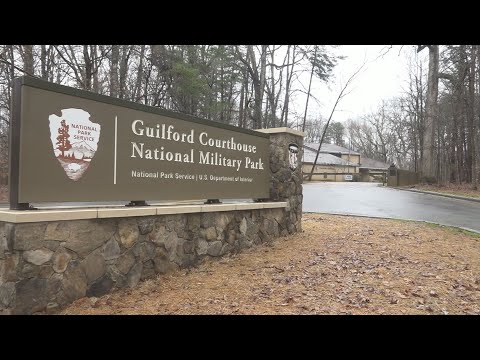 For more infomation >> Government Shutdown Impact Felt Here In The Triad - Duration: 1:47.
  For more infomation >> Lady Bears Happy Valley Play Is Here - Duration: 0:59.

 For more infomation >> Government Shutdown Impact Felt Here In The Triad - Duration: 1:12.
 For more infomation >> Lady Bears Happy Valley Play Is Here - Duration: 0:59.
  For more infomation >> Lady Bears Happy Valley Play Is Here - Duration: 0:59.


Không có nhận xét nào:
Đăng nhận xét