In Part One of this series, a point is made: violent or otherwise negative behavior caused
by replicating entertainment is not exclusively caused by video games.
It can be from television, film, music or by other people's behavior.
People do stupid things for a variety of reasons; so why is it that the media is so quick to
pin the blame on video games?
Does the media have an agenda against video games?
Why does it seem like, in any controversy surrounding video games, media outlets never
talk to people who really understand the industry?
Should we even care about what they have to say?
Perhaps one of the reasons for some of the toxic defensiveness found in the gaming community
can be traced back to the portrayal of gaming in popular news media.
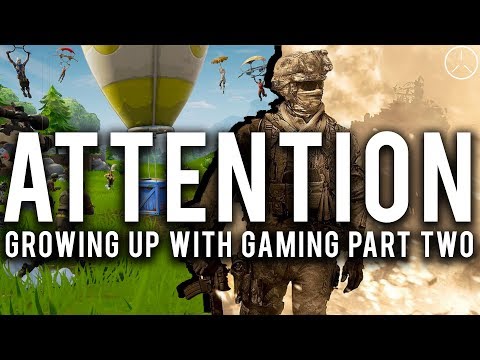
Part Two of this series will attempt to come to a conclusion surrounding not only the media's
perception toward video games, but the general population's perception, too.
Is there reason to fear?
Like most stories, it may be best to start at the beginning.
The infamous origins of the ESRB, America's video games rating board, are well documented
and widely known.
However, the call for action after games like Mortal Kombat and Night Trap was most definitely
not the first time video games had garnered widespread controversy.
The entire history of video game controversy dates back to 1976, with Death Race; a game
based on the 1975 movie, Death Race 2000.
The goal of the game was simple: hit random bystanders for points, just like in the movie.
Though, despite its rudimentary visuals and basic gameplay, it was enough to get the game
removed from stores and any further production cancelled after the public outcry against
it.
The early days of video games were their most tumultuous.
Despite the age of information technology we live in today, there really haven't been
too many published products that have stirred the pot quite like some did during the '70s,
'80s and '90s.
Really, the most controversial games of the past decade due to offensive content might
be Call of Duty: Modern Warfare 2, Hatred, and Active Shooter.
Modern Warfare 2 for its infamous 'No Russian' scene, and Hatred and Active Shooter for their
realistic depictions of violence against innocent people in domestic settings.
While Modern Warfare 2's controversy began and ended with one level, Hatred and Active
Shooter's controversies were deeply tied into the cores of those two games.
Call of Duty: Modern Warfare 2 was one infamous ordeal, but as for the other two games, they
were almost immediately banned on Steam once mainstream news and gaming news outlets started
covering them.
Case open and closed.
One of the first controversies that plagued console games as opposed to arcade games was
the publishing of pornographic titles on the Atari 2600, such as the infamous Custer's
Revenge.
Custer's Revenge depicted the rape of a Native American woman at the hands of the
player character, a cartoonishly horned-up version of the very-much real General Custer.
It wasn't the only game of its type to appear on the Atari 2600, but it was and still is
is the most infamous.
The other games of its kind aren't any less offensive, either.
Beat 'Em and Eat 'Em, Gigolo, etc.; these weren't games that were on shelves in Toys
'R Us, that's for sure.
In fact, they came in leather sleeves so the box art wasn't completely on display.
Time for the big ones: Mortal Kombat and Night Trap.
Specifically, how the ESRB sprung from the realistic depictions of violence — which
are highly cartoonish by modern standards — but were heavily featured in both of those
games.
Both use FMV (full-motion video) to different ends: the entirety of Night Trap is made up
of interactive FMVs, while Mortal Kombat used real renders of actors as the character models.
Night Trap has players protecting a slumber party from hostile invaders by utilizing the
house's built-in traps, while Mortal Kombat… you know how it goes.
If someone were to be asked why they thought the ESRB was created, it might be safe to
assume that many people would say that it was a result of public outcry and the organization
was put in place via direct government order as a response.
And, for the most part, they'd be correct.
However, the creation of the ESRB was also due in large part to our friendly neighborhood
Nintendo.
Howard Lincoln, former chairman of Nintendo of America, made a strong case against Nintendo's
direct competitor at the time, Sega, at the hearing that ultimately resulted in the creation
of the ESRB.
Lincoln explicitly mentions that, without a ratings system, games like Night Trap would
end up in the hands of children — and that Night Trap was being purchased by children.
In a hearing ripe with non-industry experts and aging congressmen, perhaps the most catalytic
moment in the entire session was when Lincoln, an industry leader, condemned the actions
of Sega for their negligence regarding ratings systems and their enforcement.
Take away some of the blatant lies presented during that hearing: that Night Trap rewards
the player for femicide.
That video games as a whole promote homophobia, sexism and racism, etc. etc.
Lincoln's words may not have exclusively been the reason we have the ESRB, but they
may have been the most important.
Even without some of the most swaying evidence toward Congress that day, Lincoln may have
been the man who sealed the deal more than anyone else.
Also, unlike everyone else there, he also provided the most understandable reasons behind
implementing a ratings system while simultaneously being the most qualified.
While he may be a reason we have the ESRB, and while he may have been taking advantage
of a situation that put Sega in a bad light, he did present a strong case that day.
Bill White, a representative for Sega of America, did point out as a response that gaming should
have been able to regulate itself — but to no avail.
Sega was fighting an uphill battle, and was losing.
So, did Nintendo create the ESRB out of spite for Sega?
Not necessarily.
This was a conversation that was a long time coming.
Film had seen a crackdown very soon after nickelodeons across the country had started
showing them.
Government-mandated censorship began in 1915, just one decade after the first movie theater
had opened in 1905.
The MPAA, the film's ratings board, was established in 1922.
The first arcade cabinet was created in 1971.
The ESRB was founded in 1994, twenty-three years later.
However, like gaming, film had many cases of censorship and boycotting well before the
establishment of any nation-wide censorship rulebook.
The Kiss, an 18-second film shown in 1896, was the first-ever portrayal of a kiss on
screen.
It was an absolute scandal.
Many saw it as indecent — pornographic, even.
The Church was involved, and many called for police action.
Essentially, Death Race was gaming's version of The Kiss.
The establishment of a nationally standardized ratings system for video games was something
that, in retrospect, could have happened sooner.
However, video game protests and other controversies of the era were mostly thorns in the sides
of video game players at the time.
In the 80s, there was a relatively large movement that equated video games with drug use.
The establishment of a ratings system was a worrying sign that the government would
start taking serious action against video games as an art form; like they were giving
into the controversy.
Though, after April 20th, 1999, video game controversy suddenly went from a tedious annoyance
to an extremely serious issue for all relevant parties.
The Columbine High School Massacre took place on April 20, 1999 in Columbine, Colorado.
15 people, including the two shooters, died on that day and it was, for a long time, considered
the deadliest school shooting in history.
It's the event that essentially invented the 'school shooting' as an idea that
could happen, though some may dispute that with the University of Texas Massacre in 1966.
Regardless, it was mostly unheard of for a shooting of this caliber and scope to be perpetrated
by students of the targeted school.
Until then, a school shooting was mostly a student bringing a gun to school with the
intent to kill one or two specific individuals, not the entire student and staff population.
One of the major follow-ups to this tragic event was the conversation around mental health.
Eric Harris was posthumously declared a psychopath, due to his apparent enjoyment of the ordeal
and dissociation from basic human empathy.
Dylan Klebold was considered to have been severely depressed and suicidal; many experts
see the reasoning behind his motives to be less as a form of enjoyment, and more as an
act of revenge that would've lead up to an inevitable suicide.
The two considered themselves to be complete outcasts from the school, and saw the shooting
as a way to get back at the society that had seemingly wronged them, according to their
journals.
Eric Harris was a known fan of Doom.
He created his own custom levels and published them on an online forum, now referred to as
the "Harris levels."
One student of Columbine High School that had played Doom online with Harris said to
police that Harris had told him that he had modeled a level after Columbine High School,
though no such level could be found online.
However, there have been levels designed to replicate Columbine High School created by
modders in the years following the massacre.
The events of April 20, 1999 called into question entertainment's role in inciting violence
or embedding it into the minds of America's youth.
Marilyn Manson was one of the most heavily blamed, due to the extreme and vulgar nature
to his music, and with the two shooters being alleged fans.
Though, this was later proven to be false.
He repeatedly deflected the blame, instead stating that the news coverage of the Columbine
massacre itself was more gruesome than most "typical" entertainment.
Speaking to Michael Moore in the documentary Bowling for Columbine, he said if anything,
"I would listen to what they have to say, and that's what no one did."
Manson did bring up a salient point during the controversy, and it's that he believed
the media and most Americans sought scapegoats to blame during times of tragedy instead of
focusing on the direct issues on hand, such as gun safety and mental health awareness
in the case of Columbine.
Marilyn Manson would've known, too, considering he was one such scapegoat.
Even though one of the shooters may have been a fan of Doom, there were plenty of other,
more societal, reasons why those two high schoolers did the things they did that day.
Instead of questioning the cliquish and alienating nature of American high school education,
it's Marilyn Manson.
Instead of questioning the pressure American schools put on kids throughout their entire
lives until adulthood, it's a movie or TV show.
Instead of trying to connect with troubled individuals, they're pushed away until they
want to push back — violently.
Considering the focus of this series and this channel, it's easy to guess what one of
the main scapegoats for Columbine was and continues to be: video games.
Video games had just made the jump from 2D to 3D in that decade, and even though it's
rudimentary by modern standards, Doom was quite the shocker due to its relatively realistic
depiction of violence through the eyes of a virtual human being.
The birth of the first-person shooter came from the 3D era of the mid-90's, and while
Super Mario 64 and Metal Gear Solid were turning heads due to their revolutionary visuals and
gameplay, there were a growing number of citizens concerned with how this technology would represent
violence and, in theory, create virtually-trained mass shooters.
After the news came out that the Norway killer used Call of Duty: Modern Warfare 2 to quote/unquote
"train" for the massacre of 77 people in 2011, it questioned what the consequences
of realistic shooters can be, and if developers should take responsibility for what they create.
If a terrorist uses their game to learn certain reloading methods, target acquisition and
other techniques that could be self-taught in the real world based on virtual experience,
should developers be held accountable or attempt to remedy this in future installments?
Should art be compromised out of fear of a potential real-world tragedy?
Is the Call of Duty series intentionally avoiding realistic depictions of modern combat as a
countermeasure to the events of 2011?
The answer isn't as simple as it may seem; even though an almost non-existent percentage
of the world's population will consider these video games as a mode of non-informal
combat training, it does get a little scarier when you throw in a relatively modern breakthrough
in gaming: Virtual Reality.
Of course, VR can't replicate things like the smell of battle and the adrenaline of
being in a real firefight, but with the proper peripherals, it could act as a rudimentary
substitute for real-world training.
If the Norway killer used Modern Warfare 2 to train, why couldn't someone else use
a VR program to accomplish the same thing, and more efficiently?
Seeing real-world killers trained by VR is about as likely as seeing real-world killers
trained by any other quote/unquote "normal" video game, but due to the events in Norway
in 2011, it's hard to completely discount the idea.
Call of Duty: Modern Warfare 2 was in the news for another reason around the time of
its launch, and it wasn't just for its record-breaking sales numbers.
In 1999, a real mass shooting shook the air waves and created a conversation about video
game violence, but in 2009, a virtual mass shooting did the exact same thing, acting
as both the culmination of decades' worth of video game media skepticism and as the
basis for any future video game controversy.
Even though Grand Theft Auto and Mass Effect were controversial for their inclusion of
violent and sexual content, Call of Duty: Modern Warfare 2 was one of the first games
to have a specific, single moment that changed everything.
It's easy to forget, but there was once a time when the most popular pieces of entertainment
were also the ones pushing the medium forward in inventive, and sometimes controversial,
ways.
It's almost unimaginable that any of the three current Call of Duty developers would
create a controversial scene akin to No Russian, and even more unimaginable that Activision
would publish it.
The controversy that tends to attract media coverage, mainstream or otherwise, is usually
reserved for patently offensive content or any popular product that contains any sort
of violent or sexual content.
Any press isn't always good press.
One of the reasons more games aren't in the news for offensive content is that there
are just too many games out there to attract any significant news coverage to anything
that's not immensely popular.
If your mom doesn't know about a game, Fox News probably won't, either.
Hatred, as controversial as that game was, was mostly a self-contained bubble of discussion
that remained within the gaming community.
It's important to create distinctions between 'gaming media' and 'mainstream news
media.'
Within the gaming sphere, something like the Battlefront II star cards situation may have
seemed like the most intense, widespread controversy the industry has seen since, perhaps, the
No Man's Sky's launch controversy.
CNN, though?
Why would they care?
That wasn't an issue that concerned them or their demographic; at least, it may have
been, had it been framed differently.
Most mainstream news media outlets almost exclusively care about news that might directly
affect adults and their families.
At least, the adults that still have cable subscriptions.
If they had seen the Battlefront II story, it would have been angled as something akin
to: "Is the new Star Wars video game asking children to steal from you?" or "Is the
new Star Wars Battlefront II video game preying on children?"
The awareness of the existence of a controversy alone would require even a little pre-existing
interest in the gaming industry and the communities within them; and despite how popular Star
Wars is as a franchise, its gaming side doesn't hold a candle to the popularity of Call of
Duty, and, most recently, Fortnite.
Star Wars, from a gaming perspective, has mostly been safe from mainstream news media
coverage.
Regardless, it's the games that kids talk about in the classrooms that get media coverage.
It's the games that the football players are playing; the games that kids that bully
other kids for playing nerdy games play.
Those are the games that people outside the gaming sphere notice, for better and for worse,
because those are the games that parents see.
And parents are the target demographic for most mainstream news coverage.
When a parent sees their child blowing people away in a Star Wars video game, it doesn't
get much of a second thought.
But, when they're doing the same thing in something foreign to them, that's where
concern rises.
The media doesn't harbor some ages-old grudge against video games.
The only reason the media reports such seemingly inaccurate and biased stories about how video
games are allegedly creating child soldiers is because it suits the narrative that attracts
their target demographic.
It is the duty of the news media to create a program that appeals to their respective
demographics.
It's known that Fox News appeals to the right wing, while CNN appeals to the left.
It's how they stay on air.
However, the two mostly have one thing in common: parents.
The reason there hasn't been a huge amount of video game controversy in recent years
is also due to the fact that a lot of new parents have either cut cable or get their
news from other sources that appeal more directly to their individual interests.
Also, millennials are becoming parents, and millennials are the ones who have grown up
with gaming in some aspect, and mostly understand that video games are just like any other entertainment
medium and not always meant for children.
The reason why many parents or other members of the older generation are so critical of
video games is that, for a long time, video games had widely been considered toys for
children.
When a game like Modern Warfare 2 drops, which allows players to participate in a virtual
terrorist attack, it seems as if the developers were targeting children by game-ifying a mass
shooting with high scores and extra lives.
The idea of a narrative with actors and a gripping plot is lost, because that isn't
the idea of what a video game is to them.
Adults who play video games are like adults playing with children's toys to some other
adults.
Even though video games are the most rapidly-evolving entertainment medium out there, the unfortunate
common perception is that they haven't changed on a conceptual level since their origins
in the 70s and 80s.
They understand that they're in 3D now with fancy graphics, of course, but there's still
that idea that games are inherently point-based and designed to be purely for fun.
The idea of a game like The Last of Us bringing grown men and women to tears or the shocking
content of Outlast being fascinating is a foreign concept.
If the player is shooting people, it must because the game is telling them it's fun
to shoot people, right?
Of course, visceral games like Doom and Wolfenstein make it fun to shoot guns at demons and Nazis
respectively, but most games that involve violence usually give a narrative reason as
to why it's okay to shoot the bad guys: they're an invading army, or they're mercenaries
hired by an evil man seeking a dangerous lost treasure or they're an alien race dedicated
to the eradication of humans.
Usually whenever there isn't a specified reason to be shooting people in a game, it's
because the game wants the player to feel bad about the act of killing someone, which
again, just isn't a concept that's easy to fathom for a lot of people.
Fortnite, then.
It's a bit hard explaining to people who demonize gaming as something that glorifies
violence when the most popular game on the planet is all about killing other players
for fun.
But it does speak volumes on the kind of coverage video games receive in the mainstream.
In 2009, it was scary that the biggest game on the planet had a scene depicting a terrorist
attack that allowed the player to participate.
In 2018, it's scary that a game features guns altogether.
Think about that for a second: why would a game that's not presenting anything close
to the heaviness of a mass shooting receive the same kind of scrutiny and attention?
It all circles back to an earlier statement: it's the games that kids talk about in classrooms
that get media coverage.
Even when something like the No Man's Sky's launch controversy happens, which seemingly
shook the entire gaming world, it's only a unique subsection of the world's population
that feels attached to that story.
It doesn't suit the mainstream news' narrative for what its demographic should care about.
It's why gaming news outlets like IGN, Gamespot and Game Informer exist in the first place:
to report on stories unique to the gaming industry that avid video game players care
about.
The demographic of Fox News, CNN or ABC News isn't gamers: and that's exactly why their
video game coverage is often inaccurate, misinformed or biased.
They hold zero credibility when it comes to gaming news, which is why it's so frustrating
seeing some of their personalities saying things that are straight-up wrong to a demographic
that will believe whatever they have
to say.
There has been one man more prevalent in the fight against mature video games than any
other human being on the planet, and his name is Jack Thompson.
Before he set his sights on video games, he was a strong activist against any kind of
mature or indecent content that could end up in the hands of the youth, most notably
rap music in the '90s.
However, Grand Theft Auto: Vice City is the game that turned him over and into the infamous
legend we know today.
Thompson was immensely concerned with the effects of violent video games on children
and teenagers.
He strongly suggested that school shooters were mostly, if not completely, made up of
gamers.
As an attorney, he filed lawsuit after lawsuit against video game developers and publishers,
essentially stating that it was their fault these games got in the hands of the wrong
people.
Thompson didn't find much success as an attorney in his fight against alleged video
game indecency.
However, once he took more of an activist role and began appearing on television programs
and debates, that's when his voice was more prominently heard by both those who agreed
and disagreed.
It's not really necessary to pick apart some of his arguments about the legality of
selling M-rated games to minors, because they were simply either ill-researched or intentionally
skewed to suit an anti-gaming narrative.
One of his biggest lobbying points was that it was apparently completely common to sell
M-rated games to children and that by making a game M-rated, developers "admit they're
harmful
to minors."
Of course, some parents buy their children games like Grand Theft Auto V and Call of
Duty: WWII without thinking twice, but most retailers that specialize in video games do
require parental permission for any minor wanting to purchase an M-rated product thanks
to the ESRB.
Even articles written ten years ago, in 2008, state that it was becoming "increasingly
difficult for children to buy M-rated games."
In 2011, games were officially declared art by the Supreme Court, placing them under the
same First Amendment protections as movies, books and music.
So, that should've been it, right?
After the Sandy Hook massacre of 2012, then-Vice President Joe Biden called together a meeting
of the Presidential Cabinet and some of the gaming industry's top American representatives,
such as John Riccitello, former CEO of EA.
Biden suggested that perhaps a tax on violent video games would make sure only the people
who wanted them would get them, though this idea was merely a suggestion, and was never
intently considered.
Ultimately, the meeting was inconclusive, leaving the industry essentially as it already
was.
Just this year, in February 2018, President Donald Trump met with video game executives
from Take Two, which owns Rockstar, ZeniMax, who owns Bethesda, and the ESA, as well as
critics and other politicians.
Even Republican Senator Marco Rubio chimed in, noting that psychologists have found no
substantial evidence that could link violent video games and real-world violence.
Of course, in Part One of this series, this information has already been covered.
For the meeting, a compilation of clips from violent video games was created, which has
since been heavily criticised for showcasing the clips without any sort of narrative or
gameplay context and for potentially skewing the message.
A ghost of the past even reared its head for the meeting, with Jack Thompson getting in
touch with Kotaku writer Jason Schreier, simply telling him the meeting would have people
"of great interest to the video game folks."
Thompson was not in attendance of the meeting, but it is interesting to note that, even though
he hasn't been in the attorney or activist game for a while since his disbarment in 2008,
Jack Thompson still lurks behind the scenes to this day.
Should we, as an industry and a community be afraid of the day that the government finally
cracks down on mature content and stops this cool little thing we've had going on?
No.
After the Supreme Court decided that video games were to be considered art and to be
protected under the First Amendment, it effectively ended any major threat right then and there.
Could that decision be revoked?
Perhaps.
Though, in the dozens of hours of research that has gone into this series so far, most
of the articles and videos on the topic of video game violence were in support of gaming.
Even from websites like The New York Times, CNN, Fox News and more, it was legitimately
difficult to find articles and editorials that demonized video games.
After years and years of research, it finally seems that we as a collective are mostly at
an agreement that video games are not linked to mass shootings or other violent crime.
Yes, we still have talking heads on morning talk shows and political activists who are
afraid of this relatively new medium of entertainment.
However, the problem is not as severe as it might seem on the surface.
As more and more kids grow up with gaming, and as those kids are put into positions of
authority, this problem can only get better.
Those presenters on Fox News and Good Morning America?
It might take a few years, but their replacements might even be gamers themselves someday.
Ever since Pong found itself in shopping malls as an arcade cabinet in 1972, there has not
been a single person born in America without a video game existing in their lives in some
capacity.
It's highly unlikely that, as time goes on, this problem gets worse.
Is the biased, inaccurate presentation of gaming in the mainstream news frustrating?
Yes.
Is seeing the President of the United States seemingly aligning himself with an anti-video
game stance concerning?
Of course.
But just as the mainstream news media doesn't seem to care about the goings-ons in the gaming
community, why should the gaming community care about the goings-ons in the mainstream
news media?
 For more infomation >> За кулисами TI8: Медиа, Косплей, Open AI, Late Game - Duration: 8:00.
 For more infomation >> Shooting cancels high school football game - Duration: 1:48.
 For more infomation >> High School Football Game Cancelled Because Of Gunfire - Duration: 1:58.


 For more infomation >> Life The Game turn on japanese subtitles - Duration: 9:52.
 For more infomation >> Wild Week 1: Warren JFK rallies for win on game's final play - Duration: 0:54.

 For more infomation >> Ratchet & Clank; Going Commando PS2 Longplay - ALL THE GAMES - Part 7 - Duration: 2:50:25.


Không có nhận xét nào:
Đăng nhận xét