Imran Khan became an inspiration to youngsters for venturing into cricket on an international
level.
He rose to popularity with his amazing talent as one of the
finest cricketers Pakistan has ever produced.
His journey of transforming from the biggest heartthrob of cricket to an influential politician
is highly impressive and motivating.
He is credited for leading Pakistan to its first ever Cricket World Cup title in 1992,
defeating England, thereby being termed as the most successful and prominent cricket
captain of Pakistan.
This champion cricketer surprised the world as an exceptional fast bowler and a great
all-rounder, thus giving cricket an all-new form in the
country.
He excelled not just in the cricketing arena, but also in the political world and social
ground.
Imran Khan retired from cricket in 1992 and entered politics by forming his own party
– Pakistan Tehreek-e-Insaf (Movement for Justice).
He established the first cancer hospital, in Lahore, after losing his mother to the
deadly disease, treating the poor for free.
Imran Khan is involved in raising funds for various health and educational projects, coming
out a helping hand for the underprivileged and deserving.
Imran Khan Niazi was born on October 5, 1952 in Lahore, into a well-off Pashtun family
to Ikramullah Khan Niazi and Shaukat Khanam.
He completed his schooling from English-medium Aitchison College, Lahore, and went to Royal
Grammar School Worcester, England, to pursue higher studies.
Imran Khan graduated in philosophy, politics and economics from Keble College, University
of Oxford, in 1975.
Hailing from a cricketing family, he played the game as a teenager in Pakistan and continued
in England.
imran khan cricketer made his test debut in the 1971 English series in Birmingham, but
failed to make a mark due to his not-so-good performance.
In 1974, he debuted in One Day International (ODI) in the Prudential Trophy and was selected
in the national team after returning to Pakistan.
His splendid performance against New Zealand and Australia during 1976-77 added to his
rapid success, which made him a prominent fast bowler in Pakistan during the 1980s.
Imran Khan was chosen as the captain of Pakistan cricket team in 1982.
He performed stupendously as a fast bowler and all-rounder, leading his team to its first
Test victory against England, at Lord's, after 28 years.
Under his captaincy, Pakistan won 14 out of 48 test matches played, losing out on 8 and
26 resulting in a draw.
In the ODI version, he played 139 matches, with 77 wins, 57 losses, and one tie.
A stress fracture in his shin kept him away from cricket for two years.
He returned and gave Pakistan its first ever Test series win against India in 1987, followed
by Test series win in England.
He retired in 1987, but returned in 1988, upon Pakistan President General Zia-ul-Haq's
request.
He won a Test series against West Indies and was declared 'Man of the Series' for his
23-wicket haul in 3 tests.
In 1991, he established Shaukat Khanum Memorial Trust, a charity organization associated with
research and development of cancer and other related diseases, named after his mother.
He retired from cricket in 1992, with 3807 runs and 362 wickets in tests and 3709 runs
and 182 wickets in ODI.
He entered politics in 1997 by setting up his own party 'Pakistan Tehreek-e-Insaf'
(PTI), as an initiative to eradicate mismanagement and corruption in Pakistan.
imran khan politician contested in October 2002 elections and was elected as a Member
Parliament from Mianwali.
In 2008, he founded Namal College, an associate college of the University of Bradford and
established Imran Khan Foundation.
During the 2013 election campaign, he started 'Naya Pakistan Resolution', after which
his party posed a threat to the main opposing Pakistan Muslim League-Nawaz (PML-N).
He rejected the offer to collaborate with Pakistan Peoples Party (PPP).
imran khan speech injured his head and back upon tumbling from a stage during a campaign
rally, four days prior to elections and continued to vote appeal from the hospital but party
lost to PML-N.
His views on cricket have been published in different British and Asian newspapers and
Indian publications, including Outlook, Guardian, Independent, and Telegraph.
imran khan jalsa is actively involved with commentary on cricket matches for various
sports networks, like Star TV, BBC Urdu, and TEN Sports.
He became the hero of Pakistan in 1992 when he accomplished his greatest success winning
the first ODI Cricket World Cup for Pakistan, defeating England in the finals, at Melbourne,
despite suffering from a ruptured shoulder cartilage.
This all-rounder's triple in 75 tests, comprising of 3000 runs and 300 wickets, is said to be
the second fastest record behind English player Ian Botham's 72.
His world records as a captain include most wickets, best bowling strike rate and best
bowling average in test, and best bowling figures (8 wickets for 60 runs).
He received 'The Cricket Society Wetherall Award' for being the leading all-rounder
in English first-class cricket, in 1976 and 1980.
Imran Khan lifestyle was honored with the 'Sussex Cricket Society Player of the Year'
award in 1985.
He was awarded the second highest civilian award, Hilal-e-Imtiaz, from the Government
of Pakistan.
In 2004, he received the Lifetime Achievement Award at the Asian Jewels Awards, London,
towards his support for various charity programmes.
He was given the Humanitarian Award at the 2007 Asian Sports Awards, in Kuala Lumpur,
for setting up the first cancer hospital in Pakistan.
Pakistan Tehreek-e-Insaf received the special silver jubilee award, along with other cricket
legends, at the inaugural Asian Cricket Council (ACC) Awards, in Karachi, in 2009.
In 2009, he was inducted into the International Cricket Council (ICC) Hall of Fame, as part
of its centennial year celebration.
Imran Khan lifestory married English socialite, Jemima Goldsmith, in a traditional Islamic
ceremony in Paris, in May 1995, who converted to Islam before marriage.
The couple re-married in a civil ceremony in Richmond, after a month.
They have two sons – Sulaiman Isa (1996) and Kasim (1999).
The couple ended their nine-year old marriage in June 2004, citing difficulties in adapting
to the Pakistani life, by Jemima, as the reason.
His decision to foray into full-fledged politics struck his marriage, resulting in attacks
by his opponents on the pretext of being related to Zionists, since Jemima's
father was a Jewish.
In January 2015, he married British-Pakistani divorcee Reham Khan, a former BBC weather
girl, in a secret ceremony at his residence in Islamabad, despite objections from his
own family.
The marriage was short-lived and the two of them divorced in October 2015 In February
2018, he married his spiritual advisor Bushra Manika.


 For more infomation >> Aloo paratha recipe - pinjabi style Aloo paratha - putato stuffed paratha - Duration: 5:42.


 For more infomation >> The secret behind Sonny's BBQ's St. Louis-style ribs - Duration: 5:16.



 For more infomation >> Victoria Beckham Has Worn 14 Different Engagement-Style Rings -- See Her Posh Collection! - Duration: 7:21.
 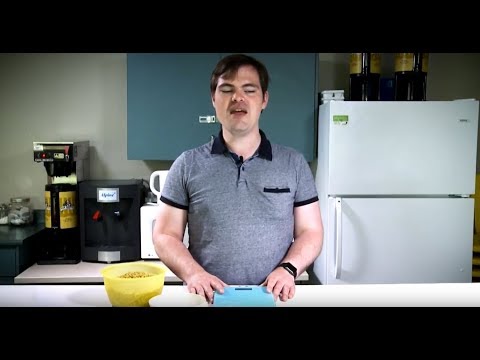 For more infomation >> AMI Blind Life Hack: Kitchen Weigh Scale - Duration: 1:16.


Không có nhận xét nào:
Đăng nhận xét