so you want to drive a car with a manual transmission well I have bad news and
good news the bad news is there are fewer models on the market now than ever
before that have a proper three peddle manual transmission the good news is the
ones that do offer the feature are easier to learn on then old cars were
whether you're going to drive a new car or an old car I commend you and I'll get
you started now the first part of the lesson is I'm going to explain what's
going on when you're operating the manual transmission now it isn't
absolutely necessary could just be about a stick and a pedal but what I found is
people tend to grasp this a little bit faster learn faster if they understand
what is actually going on under the surface a car with a gas or diesel
engine has a transmission with multiple gears for the same reason a bicycle does
a good bicycle not one of those retro hipster one speed bikes these the idea
behind having these gears is you can pedal only so fast and you reach a
certain point and to go faster you need to shift up same thing is true with a
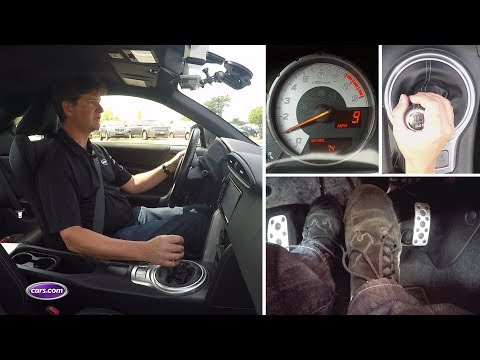
car's engine let's take a look at the tachometer the tachometer is a gauge
that shows engine speed and essentially all cars have them even automatic you
just don't pay attention to it it'll be marked typically one two three four or
in some cases ten twenty thirty but the idea is multiplied by some number that
is the revolutions per minute of the engine and when you hit the gas a bit
you'll see the needle goes up as the engine speed increases typically though
a gas engine will run only up to about six to eight thousand rpm it depends on
the car and there are some exceptions in this car it's about 7400 rpm where you
see a redline begin and that redline is called the red line and the engine is
not supposed to run in the red line because it can be damaged
now newer cars are less likely to actually incur damage than older ones
but still that's not where you want to be so if you want to go faster and
faster in a car you need to be able to shift to the next gear simple right
just like a bicycle well there's one area where it's not like a bicycle
on a bicycle when you start out you just pedal 1 2 3 4 you can start from a
standing stop an engine on the other hand has an idle speed of typically 750
rpm so little run from 750 rpm - in this case 7400 but below 750 nothing so
what's happening is when you're sitting still your engine is going 750 rpm and
your transmission and the gears are not moving at all and you've got to get them
going together at the same speed and that is going to be your job through the
use of the clutch clutch pedal and you are going to suck at it it's going to be
hilarious to me you're gonna hate it but I'm laughs and just thinking about it
but here you probably ought to laugh at it too because you're going to be bad
but if you stick with it and practice you're going to get better so let's
start with the pedals you'll see the extra one here the third that is the
clutch pedal but it looks like there are four pedals in this car and that is
because this one is technically called the dead pedal but a better word for
that is the footrest it doesn't really do anything and footrest is a good name
because that is what you're supposed to do and that is rest your foot there do
not leave your foot on the clutch pedal the whole point behind the clutch is use
it and then you get off of it put your foot on the dead pedal or the foot rest
here's an important tip before you even get started when you're operating the
clutch pedal you need your whole leg you're not putting your heel down
anchoring it like you might with the accelerator pedal and just tilting at
the ankle you need your whole leg it's a little bit more like a brake pedal in
that regard also when you apply the pedal you always go all the way down to
the floor and release all the way out always step in all the way release all
the way and when you're not using the clutch rest on the dead pedal now before
you even head out if you're just learning how to drive a manual
transmission think ahead and wear sensible shoes you don't need fancy
driving shoes or anything but you're the tip don't wear a big clunky shoe and
don't wear anything with a big heel and don't judge me I'm trying to help you
and it's free once once you learn how to drive you can wear whatever you want but
for training purposes be sensible now let's get to know the shifter or the
stick which is how you put the transmission in the different gears the
pattern for the forward gears is pretty much the same in everything and you'll
see it either on top of the knob or somewhere nearby
typically the difference between vehicles is really just about how many
forward gears it has this car has six older cars may stop at four forward
gears some cars these days have seven all just affect how much shifting you'll
be doing now one of the most important things you need to know is when it's not
in gear and that is neutral neutral position is straight in the middle of
all of these and you'll know it's in neutral when the stick wobbles left and
right now I'm gonna step on the clutch pedal even though the engine is off and
you'll see now I'm in first gear up and to the left now notice it doesn't slide
left and right in neutral there's my wobble so first second is below to the
right and up is third and so on it's pretty simple stuff now all cars are
gonna have a reverse gear that can be in a different location used to be up in to
the right for a lot of cars now and nowadays are starting to see them on the
left the best cars will have a little lock out like this lift collar that
prevents you from going into reverse unless you really mean it
and when you're practicing going into first once you get a little bit good at
that you can start doing the same thing with reverse okay you want to find an
empty or nearly empty parking lot or road and it's important that it be flat
because you're going to be practicing taking off in first gear and reverse and
the effects of gravity can just complicate things it you need to start
the car when you start a manual transmission it's always important to
make sure it is a neutral wiggle that stick and in newer cars especially
it's necessary not just good practice to step on the clutch pedal because that
will allow the engine to start without stepping on that pedal you can turn the
key all you want it wouldn't have started with a new car so when you take
off from a stop in a car with manual transmission you are essentially trying
to coordinate the application of the gas and the release of the clutch pedal or
the engagement of the clutch but what I'm going to do is have you practice
first without stepping on the gas at all just use the clutch pedal to get a feel
for the clutch engagement now when you lift off the pedal you're engaging the
clutch when you step on you're disengaging I'm just gonna call it
clutch in and clutch out because that's the simplest thing to remember when the
time comes to actually do it so what you'll do is you're going to watch my
feet watch everything I do you're stepping on the clutch pedal alright
stick goes into first I happen to have the brake on so I'm going to take the
parking brake off and then you're just gonna slowly let that clutch pedal out
see what I'm doing right now now if you have a newer car this is actually a
little easier because the engine control unit the computer senses the load and
will compensate and give you a little bit more gas so here you can see my
foots off the pedal I'm in first gear and I'm moving pretty simple stuff every
car is different and I'm gonna do it again for you here's how we stop I'm
right I've got my foot over the brake clutch in
and I pull the shifter out of first into neutral and come to a stop all cars are
different what you're doing is you're getting a feel for where the clutch
engages in some cars it's lower in the pedal travel like close to the floor and
some it's higher up all cars are released a little bit different so again
clutch in first gear let it out slowly
and there you go you put her around you can put around a little bit in first
gear if you want to will discuss whether or not we drive in first gear in a bit
so clutch in stick into neutral brake we stop now it's actually the same
situation for going in Reverse aside from the gear being different clutch in
I'm lifting the collar as necessary for this putting it in reverse and slowly
letting that pedal out I am looking behind me and I have a backup camera so
it's I don't want it to look like I'm just blindly backing up there we go and
we're moving now you might find that I'm gonna stop now ready remember clutch
in break and take the stick into neutral verse skier tends to be a little bit
faster than first because it's the only one you got so it will feel a little bit
different you're gonna want to practice with that too now having gotten a feel
for the clutch application I'm going to show you how we apply the gas and
release the clutch at the same time and lets you do the same thing you just did
but faster here we go clutch in first gear now watch my feet
I'm going to add some gas and release the clutch and we're moving in first
gear you can hear we're moving faster this time okay same as last time
clutch in braking stick back into neutral now you probably want me to tell
you what RPM you should be going when you release the clutch to take off I
can't tell you that reason being first of all all cars are different I want to
say it's gonna be around 2,000 rpm just to get you going but first all cars are
different and second I don't want you focusing on the tachometer you're much
better off getting a feel for this just by doing it and I feel the same way
about when we get to the point where we're shifting through the higher gears
as well so we did it once let's do it again
ready clutch in into first gear adding a little gas letting out the
clutch okay now let me give you one tip that I think is one of the most useful
things that that I found from instructing people on how to drive
manual transmissions and that is there's a notion that this has to be the perfect
synchronized balletic application and release perfectly even and that's
actually not true what I've found is a lot of people find the process a lot
easier while they're learning if they partway through releasing that clutch
they just if it starts to grab just hold for a second and then release the clutch
the rest of the way I'm gonna try and do that again so you can see what I'm what
I'm doing rather than just trying to robotically go in with the gas and out
with the clutch it's you're applying you come out a bit with with your clutch
foot see my hand here wait a second when it starts to grab just give it a half
second and then release the rest of the way here's what I'm doing ready
kind of hard to see I know but maybe you understand from what I'm describing and
the thing with that is you've got to be a little bit careful about overdoing it
you cannot take forever to get your foot off the clutch pedal what you're trying
to do is go from clutch in the clutch out reasonably quickly and you don't
want to do what's called riding the clutch where you're kind of controlling
the car speed by how much you're letting the clutch slip that's bad news and it
wears the clutch really quickly but on the other hand this one tip seems to
help people an awful lot now you'll notice if you do things real slowly
clutch in first gear if you do think slowly you can give it less gas here we
go ready I'm hardly giving it any gas it's not much different from
when I didn't use the gas at all right if you want to take off faster you're
going to have to give it more gas for example clutch in first gear
see that much faster same things true if you're on a hill and I'm gonna address
Hills in a bit too if you're on a hill uphill I should say you're gonna have to
give it more gas to get you going now what can go wrong well certainly things
can go wrong in this process one is you can pop the clutch maybe not give it
enough gas and kill it and that looks a little like this okay
so the car bucks a bit it's probably not going to hurt the car so what else could
go wrong as you're taking off well you give it too much gas you can spin the
tires it'll go something like this
now that is definitely cooler than killing it
but don't get addicted because neighbors don't like it cops don't like it and it
does put some strain on your car it'll wear out your tires to that end there's
something else you should be aware of that could go wrong and that is you
could smell a terrible odor chances are that's the smell of your clutch and that
means you are slipping the clutch too much and if you see smoke that's
definitely a sign then it's time to pull over and cool off let the car cool off
you should cool off all it means is you've got to go a little lighter on the
gas and a little quicker on the clutch pedal if you're just revving revving
revving and slow it in letting the clutch out and controlling your speed
with the clutch you're gonna get smelly you're gonna get smoked and you are
gonna take hundreds or thousands of miles off of the clutch unnecessarily
and once you've gotten good enough at accelerating from a stop be it in first
gear or reverse you're probably ready to go into the higher gears and I do
recommend you still do this in a and an abandoned street or a parking or lot or
the like it is much easier the hard part is over all you got to do is watch my
feet I'm gonna have to be steering during this so excuse me if I don't say
everything perfectly here we go clutch in first gear
okay we're at first revs up clutch in second gear clutch out clutch in third
gear clutch out
scuse my turn
clutch in fourth gear clutch out clutch in fifth gear clutch out touch in
sixth gear clutch out it's pretty simple now what could go wrong in these
circumstances well you might accidentally wind up in a higher gear
than you want to soon and you're gonna step on the gas pedal and nothing's
gonna happen I'll show you it's like so right now I'm in fourth gear hardly
moving hardly moving and the car vibrates there's a sound and a vibration
that means the engine is lugging and it's not good for it it's not gonna hurt
it too badly it's not like the old days cars are much better protecting
themselves and they used to be but in those circumstances all that means is
you need to be in a lower gear so let's say I'm moving forward I'm in third gear
to low what do I do clutch in go down a second clutch up
everything's fine it's not that difficult now I'm sure you have an Uncle
Tony or something like that that always told you never be in top gear below X
miles per hour well I'm sorry Uncle Tony but I've
driven hundreds of cars with manual transmissions and they're all different
what matters is that you're not lugging the engine if your car is perfectly
happy in its top gear going 40 miles an hour if you're just cruising you're fine
nothing to worry about something else that could go wrong is you could Rev too
high and hit the rev line and it might look like this
all right what just happened there was my modern car hit what's called a rev
limiter and that was a pretty hard rev limiter it what it does is it actually
stops you from going into what would be a hazardous condition for the engine old
cars didn't have rev limiters either hard like this one or soft soft meeting
the car might just slowly lose speed or might kind of bounce on the rev limiter
to get your attention so again a newer car you're not likely to do any damage
now once you've been experiencing all this successful up shifting you're
probably going to need to know how to stop right and it's actually not that
difficult people I think tend to make it more difficult
than they need to with some misconceptions about how to slow down
and stop in a manual transmission car by and large here's what you do I'm in 4th
gear right now let's just say I'm in fifth I'm in fifth you use your brake as
you normally would you come slower slower slower slower so when you get
close to the stop you put the collection put the transmission in neutral and
you're fine you don't have to down shift through the gears when you come to a
stop cars are all geared differently I've been in a couple where I've noticed
that
the the the engine starts to falter a bit at relatively high speeds and I
might want to take it out of gear a little bit sooner but by and large with
all the cars I've driven even let's say sixth gear as we are here you come close
to your stop you're getting closer and closer clutch in put it in neutral
everything's fine I've alluded to the complicating effects of gravity
especially when you're learning I'm gonna give you one tip that I think will
help but first here's what we're talking about
clutch in I'm on the brake pedal I'm gonna let off the brake now you can see
we're moving obviously that can make things a little bit more difficult when
you're just learning to get going but I'll show you how it's supposed to go
first gear see no problem because I am a professional actually it's not that I'm
a professional I just have experience and eventually you'll have experience
and you'll be driving through San Francisco like it's no big deal and to
be honest on a steep hill I might have a little trouble myself but here's a great
tip that you might find useful even once you do have experience and that is to
use the parking brake especially the hand brake and usually manual
transmission cars still have a hand brake watch what I do with my feet now
clutch in first gear now what I'm doing is I'm applying the handbrake I've got
my finger on the button here still so it's mobile now I'm letting off of the
brake pedal and then what I do is I give it gas
and I left the clutch out a little bit till I feel it grab and then I release
the parking brake and I'm off now this can be really helpful even if you are
experienced as I said because let's say you park on the street nose up uphill
and someone parks behind you and leaves no room so you have no margin of error
to rollback even a little bit that's the situation where you would again clutch
in in gear parking brake let go of the regular
brake pedal and then there you go it's a good tip now for what it's worth
nowadays newer cars have added a feature called Hill hold and that's whether they
have automatic or manual transmissions whereby you take your foot off the brake
or put the clutch and put it in first gear
let off the brake and it will hold the car for you and fortunately that has
come along right about the time that cars have stopped having an easy-to-use
hand brake like this it would be pretty hard to do what I just demonstrated with
a pedal because you only have two feet or with an electronic parking brake
switch here's a question you might not think of do you need to shift in order
the answer is no like right now I'm in third gear right let's say I gave it a
lot of gas I can go right into fifth because the
engine speed was high this is the kind of thing that might happen if you are
taking off from a light or something or on a hill let's say in first gear and
you give it a lot of revs and you rev up pretty high you can go from first to
third no reason not to now here's something you shouldn't do and that is
coast in neutral I know Uncle Tony told you you save gas by coasting in neutral
by doing this right okay maybe at some point in history that was
true probably not very true probably not worth much but take a look what's
happening right now I'm slowing down in gear you know what's happening my fuel
injectors are off they are not pumping fuel that's how modern cars work so
what's happening is if I'm accelerating and then I'm coasting you're going down
a hill like this foot off the accelerator I'm not using gas what
happens if I put it in neutral like Uncle Tony says then I am using gas
because gas is needed to keep the engine turning so there you go Uncle Tony
you outsmarted yourself so I'll try and give you some other tips
while I'm at it here's one don't drive in first gear it's not a 100% guideline
but by-and-large first gear is for getting to second gear and you do your
driving at second gear once again having driven dozens and dozens of manual
transmission cars I've been in a couple where second gear was a little bit too
tall as we call it for driving and really bad traffic and slow traffic and
I did have to drive in first gear but unless you have a car like that there's
really no need to be in first unless you're on your way to second here's a
reminder for you when you come to a stop don't do what I'm doing right now leave
the the transmission in gear or in first gear with your foot on the clutch pedal
it's bad practice but it also it produces some somewhere on a bearing
called the throw out bearing that is engaged whenever you are standing on the
clutch pedal that is designed to momentarily engage and then disengage if
you sit for long periods you're just putting tremendous extra wear on that
bearing so don't do it now here's a note about down shifting here I am going
pretty quick in sixth gear and I want to go
down to fifth I want you to see how easy this is clutch in went to fifth clutch
out not a whole lot of bucking all right same thing could be true if I were going
in sixth gear now I'm in sixth I want you to see as I make the switch I'm
getting out of this bumpy Lane as I make the switch it's not bad now if you're
getting a little bit better at this you're more advanced that's when you
learn to flip the throttle to rev-match it's called you see how I just gave the
gas pedal a bit of a jolt there now I'm going back to sixth to do it again for
you what you're doing is you're aligning the revolutions of the essentially to
simplify at the engine and the transmission for what it's worth
ninety-eight percent of the wear on your clutch happens when you're going from a
stop in first gear or in Reverse so it's not critical that you rev match but once
you get a little bit more practice you might find that you're able to do it and
keep your shifts your down shifts smoother like so watch again
nice and smooth eventually you're gonna have to park your manual transmission
car and it can be a little bit different from an automatic because there is no
park setting for the transmission so I'll show you what I'm what I'm doing
I'm in neutral I took my foot off the clutch right you're gonna rely on the
parking brake whether it's a handle a pedal or an electric switch which is the
new thing but people tend to also want to leave the transmission in gear
especially if you live someplace hilly because let's face it parking brakes
aren't perfect they're not infallible and especially as the car ages so what
do you do well there are a couple ways you can do it you can put the clutch in
put the car in gear let's say first and then turn the engine off let the clutch
out and you're good you could also presumably let's just do
it for the sake of argument you're in neutral
clutch out turn the car off then push the clutch pedal put it in gear release
the clutch pedal and then you have the added security of having the engines
drivetrain keep the car from moving just to be extra careful what I'll do if I'm
parking say nose into a space I will put it in Reverse when I park so if I come
back and let's say I absent-mindedly start the car and pop the clutch and not
realize it's in gear at least I'm going backward or not into the wall in front
of me and likewise if I back into a space or back up into my garage I'll
Park it in first gear for the opposite reason well I think that's about all the
help I can give you beginners wasn't this car black when we started it's okay
it's we should use two cars for this shoot one was a black Subaru BRZ this
one is a Toyota 86 they're essentially twins so it all worked out fine I'm
impressed if you notice by the way what was I saying yes I think I've done what
I can for you I hope you've absorbed what I've shown you and that you have
the confidence now to try driving a car with a stick shift there's no question
you're not going to be good at it at first
you're probably gonna kill the engine a few times you're probably not going to
hurt the car unless it's really old and frail you might hurt your ego a little
bit but give it time one thing you need to recognize is driving a car with a
manual transmission proficiently is kind of like typing without looking at the
keys your aren't really good at it until you aren't thinking that hard about it
just one day you'll realize you're doing it second nature subconsciously and
that's when you'll be good at it whoever is lending your you a car to let
you try to learn to drive a stick you might want to buy him dinner because
chances are you going to take a few miles off there clutch but it's all part
of the learning process good luck
you


 For more infomation >> 31 Injured in Cebu car crash - Duration: 0:59.

 For more infomation >> Little league team's gear stolen after car break-in - Duration: 1:37.
  For more infomation >> Truck Transporter Toy Street Vehicles | loader, Backhoe, Excavator, Tractor, Police car, Fire truck - Duration: 10:13.



 For more infomation >> Investigators find needles, parents, kids inside unmoving car - Duration: 1:45.

Không có nhận xét nào:
Đăng nhận xét