Thứ Sáu, 30 tháng 11, 2018

Youtube daily what to Nov 30 2018

Youtube daily car Nov 30 2018

like please

For more infomation >> Top 13 crash car 18+ fatal collisions of cars 2018 #1 - Duration: 18:24.

-------------------------------------------

The car seat tip every parents needs to know - Duration: 2:30.

For more infomation >> The car seat tip every parents needs to know - Duration: 2:30.

-------------------------------------------

Man pulled from submerged car 'more thankful than I've ever been' - Duration: 1:40.

For more infomation >> Man pulled from submerged car 'more thankful than I've ever been' - Duration: 1:40.

-------------------------------------------

Mr. Joe Pretend Play with Car Wash for Children and with Cleaning Toys! - Duration: 3:05.

Mr. Joe Pretend Play with Car Wash for Children and with Cleaning Toys!

For more infomation >> Mr. Joe Pretend Play with Car Wash for Children and with Cleaning Toys! - Duration: 3:05.

-------------------------------------------

Trash To Track - Episode 0 - Introduction to the team, car, and series - Duration: 7:32.

- We're good.

- Alright.

- Okay, I'm Joe.

I'm the mechanic.

(upbeat 80's music)

- [Robotic Voice] Joe the mechanic.

- I've got 15 years or so under my belt.

Most of my mechanic knowledge history has been

transmission rebuilding, repairs, that kinda stuff.

I have done a few projects on the side.

Most of my personal projects were Foxbody Mustangs

V8s, five-liter, rear-wheel drive.

I had planned to do a project car for quite some time.

My only real stipulations when I was looking for

a project car was rear-wheel drive, manual transmission.

Rear-wheel drive cars are, to me

a lot simpler to make consistent power with.

- I'm Justin, and I'm Joe's brother-in-law.

For this series I'm gonna be handling

more of the filming and the editing.

(upbeat 80's music)

- [Robotic Voice] Justin.

Cameraman.

- And stuff like that.

(episode theme music)

We should introduce the car that we're gonna be working on.

- Cut to some footage.

(whip snaps)

(synth-y dubstep music)

Through the shop that I currently work at

I picked up a

all original

1992 Mazda Miata MX-5

1.6L, five-speed manual car.

It had some maintenance issues

that the original owner deemed

too expensive to perform on the car.

He was ready to send it to the scrap yard.

I picked it up for $500 CAD.

The brake line from the master cylinder to the rear brakes

rusted out right under the firewall.

And that brake line had blown-out

the rear brakes were non-existent.

The pads were completely gone

the rotors were rusted down to a super thin material so...

Before we started filming I replaced the clutch

I completed entire rear brake replacement

pads, rotors, calipers, flex lines

all got replaced with stainless steel braided lines

and the hard lines all gone bent up

with new steel lines, flare fittings...

In talking to each other we kinda decided

hey, why don't we turn this into

a just dedicated project car?

Try to get some fun track days out of it.

Turn it into more of a race car.

- Right after that was when we thought

we should film this.

(upbeat music)

So the series is called "Trash to Track"

- Yep, this car, the original owner

had deemed it for the trash

and now we're hoping to make it fairly capable on the track

as Miatas were very known for

- Is that a joke?

- Kinda. (laughs)

We've got a plan for the car on paper

but we don't wanna give away all the details right away.

We're gonna try to focus on fairly easy add-ons.

Kinda simple stuff like what you guys

might be able to do at home in your garage

and then, later on in the build series

we'll increasingly get the repairs

to come up in difficulty.

We're not a big company

we don't have a whole bunch of sponsors.

We're not just gonna make some

massive orders from part supply places.

- We're gonna try to do what we can ourselves.

- Definitely.

But when it comes to, like, bodywork and structural welding

like, we'll definitely outsource that kinda stuff.

(episode theme music)

- What we decided to do was to break it up into

kind of the conventional season structure.

So we're gonna have seasons.

We don't know how many yet.

- Season finale episodes are going to be set aside

for a big repair or

a large performance add-on that

again, we're kinda keeping under wraps.

- Instead of just rushing through everything in a time-lapse

we're gonna slow down a little bit

so you can actually follow along.

- I will give as much instruction as to

what we're doing, why we're doing it

and how we're doing it as I can.

- And in every episode we're gonna cover

three items or three tasks.

- Three things, yeah.

- Three things.

- Yeah, we'll probably try to stick

with one performance modification

one aesthetics modification

and then another one that may

just be part of the restoration.

Like if we find a damaged component

or a rusty component

or something that needs to be restored or repaired

but mainly focusing on what we're doing to upgrade the car

and turn it kinda more from a bone stalk

Miata that it was when we got it

to the track car that we're building this series for.

(episode theme music)

- One episode every three weeks.

- Keep in mind this is a 25, 26 year old car

so finding parts

some stuff could be very specific.

That three weeks gives us enough time

to acquire all the parts

order anything new

if we're doing some big modification and that kinda stuff

some of it takes quite a bit of time

that would happen behind the scenes, right?

If you guys like the idea of our build series

or you wanna follow along

subscribe to our page.

Give us some comments

what you wanna see us do in the future.

If you guys have any questions as well

feel free to ask, comment, and we'll do our best

to give a proper answer or get back in timely fashion, too.

(episode theme music)

For more infomation >> Trash To Track - Episode 0 - Introduction to the team, car, and series - Duration: 7:32.

-------------------------------------------

30 car crash - Duration: 0:31.

For more infomation >> 30 car crash - Duration: 0:31.

-------------------------------------------

WPL B36 - Best WPL car so far !! - Duration: 18:32.

yes I finally got it !!

My new WPL B36

First WPL In solid BOX !!

Look !! Not smashed BOX !!

Standard no need manual :D

Man don't need instruction :D

I will unpack it and show it all later

AND THERE IT IS !!

It's incredible

The amount of mold's they need to make this car !!

What You get in box ??

Small remote

It's more for kids but still no problem in using it

Centering pot mean that there is a servo in car

WPL don't have screwdriver in box like JJRC :D

2 AA batteries

Standard cheap USB charger :D

Small details like mirrors and search light

Search light have transparent plastik and that look great

Spare leaf springs

NOT LIKE OLD WPL LEAF SPRINGS !!

They are much more solid !!

And beauty itself !!

All doors open !!

Plastic hinges - may brake over time

Spare wheel on back

Antena (I think it's antena)

Mail box ??

LI-PO battery !!

Smallest I have !!

Look at this suspension !!

Great tires !!

I shaved all My tires like this long time ago

YES !! A SERVO !!

Tires are soft

I will need to rotate it

I don't ride on water so I want to get more grip

Centering pot is sensitive !!

Servo response is fast

YES !! PROPORTIONAL THROTTLE

Wheels woble like in all WPL cars :D

I love how this car work in RTR version !!

And finally realistic light's color !!

Time for part that You all love :D

Orange tape ?? I take off that later

Amount of details is incredible for this price

You can put gigant battery there :D

Can I open this ??

Why not :D

We can add some details here :)

By the way, 1:18 figures are bigger :D

This is new :)

Trying to figure out how to open it

Wires are not to long

Markings in Chinese :D JJRC is better :D

Note that servo have 3 wires !!

WPL kit servo

Let's see motor now

Longer like in new WPL KIT cars

gears fall out :D

Gearbox is build like in servo

DON'T OPEN IT !!

Let's see differential

METAL !!

Great !!

BEST WPL MODEL !!

For more infomation >> WPL B36 - Best WPL car so far !! - Duration: 18:32.

-------------------------------------------

Arrest Made In Killing At West Nyack Used Car Shop - Duration: 0:36.

For more infomation >> Arrest Made In Killing At West Nyack Used Car Shop - Duration: 0:36.

-------------------------------------------

Busking in car boot sale part 2. 2018 :) - Duration: 1:08.

Hope you enjoy the journey we are on. Subscribe for real time notifications.

For more infomation >> Busking in car boot sale part 2. 2018 :) - Duration: 1:08.

-------------------------------------------

New car tech making repairs more expensive this winter - Duration: 2:06.

For more infomation >> New car tech making repairs more expensive this winter - Duration: 2:06.

-------------------------------------------

#27 Future Driving Part 2: Flying Cars with Kaushik Rajashekara - Duration: 28:51.

MARK: This is Seeking Delphi, Episode #27. Future Driving, Part 2: Flying Cars with Kashink

Rajashekara. I'm Mark Sackler. The future lives here.

For those of us of a certain age, our first awareness of the concept of flying cars may

have come from a TV show. The 1962 Hanna Barbera Cartoon, The Jetsons. Who could forget that

opening sequence with Goerge Jetson whisking his family off to school, shopping and work

in the family's flying car?

That was over fifty years ago. But the concept was hardly new then, in fact, the idea is

roughly a century old, as we'll find out in today's interview. Kashik Rajashekara is an

IEEE fellow and an engineering professor at the University of Houston. He's been wrting

and lecturing about--and advocating for--flying cars for decades. I put in a call to him in

his Houston office to get his take on the current state of the art. Here's what he had

to say.

MARK: Raja, welcome and thank you for joining me today.

RAJA: Thank you.

MARK: First of all, if you might, give us a little bit of your personal background how

that ties in to IEEE and the entire field of self driving cars.

RAJA: My name is Kaushik Rajashekara, I'm a professor in the department of electrical

engineering. University of Houston. i've been working in the University of Houston for the

past two years. And before that I worked for the University of Texas, Dallas for 14 years,

and before that I was chief technologist in Rolls Royce corporation working on electric

aircraft and electrification of aircraft and archictectures for hybrid electric aircraft

and that type of things. And before that for 17 years I worked for General Motors I worked

on the first General Motors electric vehicle that wsa commercialized the EV-1. The protype

vehicle became EV-1. Then I worked on a lot electric and hybrid and fuel cell vehicles.

I am also a fellow of IEEE and I have nearly completed more than 33 years of the membership

and I'm a fellow. And I closely work with the transportation electrification community,

there is a separate group of IEEE where are focus is more on the electrification of transportation.

So regarding the flying cars, I've been always interested in cars whenever I see the traffic

I wish we could have a flying car so I can pass all the other vehicles and go in front

of them. My interest arose more when I worked for Rolls Royce, there was a request for a

proposal from DARPA for a transformer vehicle--that is a flying car that could be used in Iraq

for various purposes. I don't want to go into details. That was very interesting. We wrote

a proposal, but we didn't win. So from there, I started thinking, I think we should be working

on flying cars so I started putting some specificiations and going through it and after joining the

University of Houston I asked some post-docs to continue to work on that one, we even wrote

a paper around flying cars. So I continue to explore the possible technologies for flying

cars and promote and I have given a number of lectures on flying cars and verticle take

off and landing in China, Singapore, India and many universities in the USA and Europe

also. So I'm still interested in this technology.

MARK: For those of us in the Baby Boom generation we probably first became aware of the concept

of flying cars from a TV show, The Jetsons, in the early 1960's. But that's over fifty

years ago, there have been many promises and many false starts since then. So why should

we think, why do you think, it's actually going to happen for real this time?

RAJA: You are correct. The flying car has been there for more than a hundred years , or

around 100 years. In 1917 the aviation pioneer Glenn Curtiss, he built the first one. So

then a lot of other companies followed and Waldo Waterman in 1937, he was called the

father of flying cars sometimes, he demonstrated better flying cars. In the 1970s, Ford was

even thinking of selling flying cars, based on the Aerocar design, but when the price

of gasoline came down, interest in flying cars came down. So there is a lot of interest

and I agree that more than 100 years of old but what has changed now is the technology.

Now there a lot going on in the vertical takeoff and landing and there is a lot of work going

on electric aircraft and the advnancement of aviation. And advancement of automobiles.

So all these technologies that have been developed for aerospace and automotive systems can be

used for flying cars. So recently a lot of companies are working on flying cars. Basically

more than 10 or 15 companies are working on flying cars. But we need to be careful. Many

companies call verticle takeoff and landing vehicles also flying cars. They are not really

in the sense they don't go on the road at 100 KM per hour or 100 miles per hour. They

will only fly in the air. There are very few companies putting a lot of effort on real

flying cars. Which can go on the road at say 80 or 100 miles per hour and then fly in the

air for about 300 to 400 miles like that. For example Terrafugia is one such company.

Which was recently bought by a Chinese company. And Aeromobil in Slovakia and there is another

company called P A L. They are going to commercialize. So several companies are working on real flying

cars which means they can go on the road, take off, vertical take off and land, and

also fly in the air. But there are many other companies are working like Heung, Lillium,

Airbus, they are all working on mainly verticle takeoff and landing vehicle, and even Uber

is working on it. Uber air taxi, that is also verticle takeoff and landing. You go to a

certain place, and then or you'll be taken to a certain place and from there you can

take the air taxi and then go. So there is a lot of interest, so the main reason is that

the technologies are available now.

MARK: That's a perfect lead-in to the next question, because I've seen any number of

things out there touted as flying cars, that to me look like just large drones or small

helicpoters. They really don't look anything like cars. so if we're going to get to that

vehicle that does both, how do we do that? What is the technology like? Is it simply

a combination of the car and the drone or small helicopter technology, or is it perhaps

something completely different?

RAJA: No. Verticle takeoff and landing is required even for flying cars. Of course,

flying cars can be done even without the verticle takeoff and landing, for example Terrafugia

transition that was demostrated a few years ago , and is still I think they have something

running--that is not verticle takeoff and landing. So that is a flying car, which can

go on the road, you can go to a gas station and fuel it and then go to your small strip

and then take off, like a small airport. But verticle takeoff and landing technology doesn't

need, does not need all the things that are required for a real flying car. For example,

a flying car, if it has to go on the road, you need a propulsion, so you need the motors

and also the associated powered electronics and batteries and all those things, for it

has to go say 100 miles or 200 miles on the road, but that is not required for verticle

takeoff and landing. So that makes it simpler. Because what is required for the ground, is

not required for the air all the time. Then it becomes dead weight. So the earlier times,

they were designing the vehicles, the flying cars, as a modification of the existing, some

of the vehicles that were already there and tried to modify it. That is one of there reasons

it was not successful. So you need to design starting from the beginning. It has to work

like a car, and then, the wings have to folded when it is on the road. And then wings have

to be opened, once it is ready to fly. For example there is a very good video, TFX from

Terrafugia. So that is a very good demonstration of the actual flying cars. So, I think that

will be the future, based on the hybrid electic vehicle technology and they're working on

that type of technology and that will be the future. That type of vehicle, if you see the

video TFX, the Terrafugia, I think that will make a real flying car. It takes off vertically,

flies like an airplane and then lands and parks, and on the road again it goes. I think

I'm not sure exactly I think it is about 100 kilometers per hour it can go.

MARK: So just in terms of what that's going to look like, is it going to look similar

to the, vertical takeoff and landing, the drone-like things I've that can just drive----that

can also drive on the road? Or is it going to look entirely different?

RAJA: It exactly looks like a vehicle like an automobile when it is driving on the road.

And even when it is flying, it looks like a car, or an automobiel, but the wings being

unfolded. You can see the wings very clearly, actually as I'm talking to you I'm seeing

the picture of Terrafugia TFX. So wings are unfolded like any small airplane, but if you

look from the bottom, it looks like a car. So it is bascially a car with wings when it

is flying. So there are cars, like for example, the Moller International, is also working,

the other one from PAL, which they are going to commercialize by the end of this year or

ealry next year, but it is quite expensive, nearly 600K, US dollars, so that is a tri-wheel,

that means three wheels. So like in India like an auto rickshaw, it is called. A three

wheel vehicle, that is also, it can go on the road and also it can fly in the air. But

that is what I've seen in the picture, it is not a verticle takeoff and landing, but

it needs some strip of land. Maybe it can even fly from the road itself, but you need

to isolate and then it can take off. So you don't need a separate airport or a smaller

airport for takeoff. Whereas for example, Heung, that is a Chinese company, or Lillium.

They can vertically takeoff and land, but once it lands, it cannot go like a car. So

it lands on a strip, or on another vehicle, that vehicle can go. That vehicle has wheels

so that can go on the road also. So there are several versions of the verticle takeoff

and landing vehicles that are being demonstrated. And also some flying cars have also been demonstrated.

The best flying car, which doesn't have verticle takeoff and landing is the Aeromobil from

Slovakia. That is a very good vehicle. So we need to add the VTOL capability then it

will be very good..

MARK: Let's get on now to some of the logistical issues here. Everybody's favorite or un-favorite

technologist, Elon Musk, has kind of spoken out against flying cars and the whole concept.

Now obviously he maybe has some ulterior motive, obviously he is desinging electric cars with

Tesla to drive on the road, his Boring Company is making tunnels to go under the road, so

we can possibly take that with a grain of salt. But he does have some sorts of issues

do make you stop and think may be legititmate. Obviously safety is one of them. It's bad

enough to worry about somebody when your on the on the road hitting you from the left

or the right or the front or the rear, but landing on top of you is certainly an issue.

Traffic control, particularly if you have a lot of different technologies, from a lot

of different companies--that's an issue. And there may be others, but why don't you start

with addressing how we're gonna deal with things like safety and traffic control.

RAJA: Yeah, that is a very good question which many people ask me. My first quick answer

is like this. I will explain in more detail. Assume that we didn't have any vehciles on

the road. All of them were flying. Then one day somebody thinks that let us put vehicles

on the ground also. On the land. Then immediately there would have been serious objections,

that how can you put it there are so many trees, so many mountains, water, rivers, people

are walking. We cannot put a vehicles on the land, it has to be in the sky. That is what

people would ask. But now we already have vehciles running on the land with traffic

congestion and all those things. But the main thing is, if your--again I would suggest looking

and watching the video of Terrafugia TFX, there are a lot of safety aspects that are

incoroporated. For example, if something happens they have parchutes, that can drivers can

fly off. And it has to be autonomous. That is very important. It has to be controlled

in such a way that one vehicle doesn't go very near to the other vehicles, so it has

to be some type of repulsion that has to be incorporated. And invisible lanes have to

be set up. And comunication is very important technology. The communications control and

always montioring of the traffic, so a lot of things have to be done from the ground.

But to start with demonstration purpose maybe we should restrict it to medical applications

for emergency for police and others gradually all these things have to be--like safety,

communications, have to be implemented more and more, and also more standards have to

be developed. Of course there are no standards exactly for flying cars, because there are

no flying cars right now commercially. But there are a lot of saftey standards for aerospace,

lot of safety standards for automobiles. We need to combine both of them and then we need

to incorporate the technology of verticle takeoff and landing. And the landing is very

important, as you said, so it doesn't land on somebody else. So what should be done.

So all these things have to be developed over the years. Because even the computers or iPhones

for example. What we have today is very small, you put it in your pocket. About twenty years

ago it was such a big phone we used to call it a car phone. Not even a cell phone. And

so as the technology was people start using more and more of this type of vehicles, and

they find the advantage, then I think this technology will really help, because with

the help of the flying car technologies, and with the incorporation of the electric aircraft,

for long distances like Cessna Citation, business jets with 12 passenger type of things, we

don't need big airports. We don't need like Airbus 380, or 747 or even a 777, that type

of airplanes. People would prefer to take smaller airplanes and with ten or twelve people.

It will revolutionize the whole technology of transportation, once we start developing

all these technologies. Like flying cars, and electric aircraft and smaller airplanes.

Because I don't want to go with 600 people or 500 people sitting in the same airplane,

five hours or three hours in advance, so then fifty years or sixty years there may not be

any major airports or big airplanes. So this type of flying cars and smaller airplaines,

I think will be the future, and all the communications and safety problems will be gradually addressed,

and I think with so many things happening the technology advancements, I am confident

that we can achieve this type of technology in the very near future.

MARK: An interesting part of that, and you mentioned, acting autonomously, and I just

most recently completed as the first part of this future driving series, a podcast with

IEEE's Alex Wyglinski, one of the things I brought up to him which he agreed was very

important, Ford recently just in the last couple of weeks, issued a letter to the car

industry caling for some kind of universal communication language, to be used by all

the different makers. The autonomous vehicles are going to need to talk to each other to

keep there from being chaos on the roads and I would assume, and corect me if I'm wrong,

but that really is gonna apply even more so to flying cars, because chaos in three dimensions

is probalby even worse than chaos in one or two dimensions.

RAJA: That is a very good point. That is very important. Say for the automobiles, connected

car technologies, that is one car talks to other ones so that we can get rid of many

of the traffic signals and all those things, so that if the cars can talk and adjust there

speed, then we don't need so many signal lights and also it will be more safe. So when it

can be done for the vehicles on the road, with so many people and so many people and

so many obstructions then definitely it can be done for the flying cars where there are

no obstructions and its all free and connected car technology with the autonomous vehicle,

they are very important for this so that as you said, three dimensional collision is worse

than collision on the road. Even for the road vehicles, even if there is a colllsion, it

still remains on the land. But, if it happens in the air, it will fall to the ground, that

is more dangerous. So very important to have autonomous control of the flying cars, for

both as you said, for the land vehicles and also for the flying cars. For the flying cars

it is much more critical, and they are to be controlled very safely.

MARK: Let's go on to the implementation and the market. Early price tags I've seen on

these suggest that this is not a mass market item, at least not right now. Clearly that

can change in the future, but it's starting out to look like that it's only going to be

an elite flying taxi service, maybe the military, as you said maybe for health and police. When

you're talking a couple hundred thousand dollars up into the millions, this is not something

for the mass market. So, in terms of rate of deployment where do you see these popping

up first and what time frame if ever till we get to more of a mass market.

RAJA: I think to start with we should use it for emergency medical purpose, the police,

and people who are in the air like coast guard, that means they don't have to fly in the water.

Any emergency purpose we should be using these type of vehicles. But gradually the prices

will come down. For example, Tesla car, hundred thousand a hundred twenty thousand dollars

people buy. So if this can, a flying can have more advantages even then the land vehicle,

an automobile, then definitely people are willing to pay and buy. And recently there

was a study published I think, last year by University of Michigan, they said that how

many people would buy if the car price is about 500,000 or 600,000 dollars, I think

one percent said they would buy. If it is about say 200,000 or 300,000 dollars about

ten to fifteen per cent said, yes. So, as the technology advances, and more and more

people use it, and people are going to buy this technology because this will be the future.

Because there is not only convenience, one advantage we have to see, is this will really

improve the environment. Why? The environment improves because we don't have to build so

many bridges. We don't have to cut so many trees. And particularly in countries in Africa,

where there are there are plenty of natural resources, forests, we don't want to destroy

all those big forests, and keep all those animals and everything there. So if you have,

if flying cars are affordable, if they can use them then we don't have to destroy anything,

they can keep the whole landscape as it is. For example about twenty years ago we didn't--the

cell phone was not that popular. If you wanted to get a telephone line in for example in

many countries, India, China and others, you had to wait for ten years. And it was so expensive,

and it was a land line. Once the cell phone came, every person in the world in a way is

conne cted, they can call to anyplace, and even a person selling smaller things, even

a begger for example, he may have a cell phone, rather than buying some food or soemthing.

So it has become so popular people are connected. So when this type of flying cars becomes cheaper

and more and more people will fly and it will help the environment also. So that is a very

important thing. It will really change the full mode of transportation.

MARK: So, I mean, do you ever see the price, at least within the foreseeable future, in

the next 20 or 30 years, coming down to a level where there could literally be millions

of them, which I would assume, would have to be a price of 50,000 dollars or less?

RAJA: I say it will not come at 20,000 or 30,000 dollars, for example, Tesla cars are

still selling at 100,000 dollars even after more than ten years of production. Maybe around

200K for sometime. For example, I think, Terrafugia transition was I think 250K or something like

that. That is they were trying to sell. So the prices will be definitely more than 100K

for at least another 20 or 30 years. But we are now looking at a long time extending the

technology. For example, even automobiles, developed for a hundred years and it has taken

a long time. So it will take some time. Even cell phones or the mobile phones, they took

more than 20 years to the state where we are now. Computers. We used to pay 5000 or 6000

dollars at a time in the 80's, now you can buy more powerful computers costing less than

500 dollars. So, it will take time.

MARK: The stuff of science ficiton, ala the Jetsons, but maybe it's becoming science fact.

Raja, thank you so much for your time and we'll be looking forward to more of your articles

and your talks on flying cars.

RAJA: Thank you, Mark. Thanks for this opportunity and I hope we will continue to have some more

discussions on this one.

MARK: A common thread running through the first two parts of this series on future driving

is the notion of connectivity: the need for autonomous vehicles to talk to each other.

In part three we'll address intelligent traffic control with Griffin Schultz, the CEO of Rapid

Flow Technologies-- a company that is preparing for just that end. Their distributed artificially

intelligent traffic control system--currently working with conventional, manually controlled

cars--is being deployed in several communiteis with promising results and they are looking

forward to the next phase connecting their system directly to the cars, so as to communicate

with them on the road.

Links to videos and images of the flying cars mentioned in today's program are available

at www.seekingdelphi.com. Thanks to IEEE and Interprose for their help in arranging the

first two interviews in this series. A reminder that you can subscribe to these shows on YouTube,

Apple Podcasts and Player FM, and you can follow us Facebook and Twitter. Thank you

for joining me. My technical assistant is Mohammad Marouf. Until next time, I'm Mark

Sackler

For more infomation >> #27 Future Driving Part 2: Flying Cars with Kaushik Rajashekara - Duration: 28:51.

-------------------------------------------

Car Ends Up Underneath School Bus After Crash In Point Breeze - Duration: 0:23.

For more infomation >> Car Ends Up Underneath School Bus After Crash In Point Breeze - Duration: 0:23.

-------------------------------------------

2 men, teenager arrested in Riderwood car thefts - Duration: 1:51.

For more infomation >> 2 men, teenager arrested in Riderwood car thefts - Duration: 1:51.

-------------------------------------------

One Dead After Car Crash - Duration: 1:31.

For more infomation >> One Dead After Car Crash - Duration: 1:31.

-------------------------------------------

Woman hit, killed by car in Squirrel Hill - Duration: 0:24.

For more infomation >> Woman hit, killed by car in Squirrel Hill - Duration: 0:24.

-------------------------------------------

Miami-Dade Police Make Second Arrest In Stolen Car Child Abduction Hoax Case - Duration: 0:26.

For more infomation >> Miami-Dade Police Make Second Arrest In Stolen Car Child Abduction Hoax Case - Duration: 0:26.

-------------------------------------------

Car Ends Up Underneath School Bus After Crash In Point Breeze - Duration: 0:22.

For more infomation >> Car Ends Up Underneath School Bus After Crash In Point Breeze - Duration: 0:22.

-------------------------------------------

🚒 Mr. Joe Costume Pretend Play Firefighters with 🔥 Fire Trucks CARS - Duration: 2:17.

🚒 Costume Pretend Play 👨‍🚒 Firefighters with 🔥 Fire Trucks 💦 CARS

Youtube daily what to watch Nov 30 2018

Oh, hey Lincoln. What's up?

Not much Durk! How about you?

Not much. I haven't seen you in a bit.

Yeah. Actually, I have been worrying a little bit, I've been a little scared.

Oh really? What scares you?

Well, not much, but I've just been worrying about Moon Day

Why have you been worrying about Moon Day?

What if it's not as good as it could be?

Well, y'know, we all just have to do our part, and try to make sure it's good, and hold other people accountable

and try to make sure other people do their part.

Oh, well I guess when you put it that way, there's a lot less to be worried about, because I think everyone's doing great.

Yeah, I think so too.

Hey guys!

Hey, what's up Mark? We were just talking about scary stuff!

I think scary stuff is cool!

I used to be scared of

Spiders

Hats

Artichokes

Racecars

Evisceration

but now I'm only scared of being lonely and people who aren't good or cool.

Well, yeah, that just makes sense.

There're lots of people that it's ok to be scared of even if they seem good.

Yeah, lots of people are scared of me, but it's ok because then I become friends with them. I just seem scary.

I know what you mean. I have several friends, including you guys, that seemed scary when I met you, but you're cool!

Yeah, it's ok to think scary things are cool!

But some things you should be afraid of.

Yep. Alright, well it was good talking to you guys. I'll see you later.

Bye.

Buh-bye

Bye

For more infomation >> Fear | Durk and Friends - cool and fun videos to watch! - Duration: 3:35.

-------------------------------------------

New Horror Movies to Watch Right Now || Weekend Watch - Duration: 3:04.

- Hi. - Hi.

Oh, I totally missed it there.

- Hi. - Hi.

I'm Michael.

- And I'm John.

- This is the "Weekend Watch Guide."

- Where we tell you what to watch this weekend.

(laughter)

She gets so excited like a puppy.

(tranquil music)

- So this weekend's actually a really dope weekend

to check out some really cool thrillers,

or thriller musicals.

Like "Anna and the Apocalypse."

- This movie is really interesting because

it's the first ever zombie Christmas musical?

Yeah, I said that right.

- In November.

It's not December.

It's early.

- You know, it's a horror comedy movie.

So it's kind of like "Shaun of the Dead"

(tense music)

meets "La La Land."

- ♪ You got the invitation. ♪

- ♪ You got the right address. ♪

- With all your slasher friends killing zombies.

(screaming)

- Oh no. - What?

- Justin Bieber's a zombie.

- So, important question:

How would you survive a zombie apocalypse?

- Look, I'm gonna be real with you,

I don't think I would.

So, I think I would just like,

make the most of my time left.

- And do what?

- I would get some Taco Bell,

a steak, maybe a light salad as an appetizer.

Another steak, the graham cracker fro-yo

with the Cinnamon Toast Crunch on top,

and then maybe like a beverage.

- You done?

- I think this movie's (laughs) actually really cute.

I mean look, it's so silly.

You have the cliche of the zombie movie.

Cliche musical movie.

It's just so all unrealistic, but I love it.

And I cannot wait to see it.

- And it's different.

I think audiences are looking

always for something different.

- Yup. - And why not around

the holiday times, throw in some zombies,

throw in some gore, and throw in a musical.

- Go watch "Anna and the Apocalypse."

We'll be there.

- Sing your hearts out. - John will be a zombie.

I'll be eating the popcorn,

purchased from the concession stand.

If a zombie comedy is not your thing this weekend,

you could also check out like,

a true, die-hard horror movie,

"The Possession of Hannah Grace."

(dramatic music)

(voice drowned out by music)

- Stop.

- [John] This movie stars Shay Mitchell

from "Pretty Little Liars,"

who plays a police officer just out of rehab,

who is now working at a city morgue.

But little does she know that all the

crazy things happen whilst at this job.

- Let's talk about the cinematography.

It's dark, it's ominous,

she's in a morgue.

And the nature of this job

is like A) she just got out of rehab,

but she's working in a place alone with dead people.

So that's just kind of like. (tense horror music)

(shudders)

- [John] This sh*t is scary.

If I was alone on night shift at the morgue,

yeah, I wouldn't be doing anything

but hiding in a closet playing my Candy Crush.

- You still play Candy Crush?

(sad trombone)

- Don't bother.

- OK, we'll talk about that later.

'Cause really there's so many other games.

- Fans of "The Exorcist" will love this movie,

because we're really seeing a modern,

updated version of possession of a young girl.

And it's really different because the body

this time shows up dead and we think the demon's gone,

but oh no, she's still there.

- That's a curveball.

(dramatic music)

(whining)

- But, I think what's interesting

is that we're well past Halloween now, right?

And horror is still going strong.

This is like horror holiday season.

- Well it's like,

you know, the horror some people feel when

they have to go home for the holidays.

- Ah, yes.

I know that very well.

- Yeah, I don't.

'Cause they make really good food at home.

- So, that's it for today's episode

of "Weekend Watch Guide."

- Bye.

(upbeat jazz music)

- Need any more recommendations?

Make sure to subscribe to "The Daily Hit."

- Bye.

Youtube daily MRE Nov 30 2018

Youtube daily google plus Nov 30 2018

Youtube daily life style Nov 30 2018

you are just not satisfied with maybe your body your friends where you live

your career you don't really like what's going on but where do you go what do you do

III get it I had a midlife crisis apparently

we all go through it we all go through it

thanks so much for tuning into our second act with Paige and Silke for your second act of

life hey Silke hi Paige well today we want to revisit a

subject we've talked about in you know to various degrees and that is well

reinvention some call it today we're gonna call it midlife crisis and you

know why that is or isn't bad you know as we go through this I know that you

have a take on it that we wanted to discuss so I'm gonna ship it over

to you so you know I think I'd start with you know what are some of the

causes that create midlife crisis besides being in your midlife with age

right so we have the societal messages about aging which can be pretty

frightening cuz they're not the best messages the fear of the aging process

oh my god who's gonna take care of me what if this happens to me what if you

know what if what if what if always living in the what ifs

the losses and you know we could have a loss at this age but it really is all

the losses that came before midlife and I'm not talking death I'm talking so

many different forms that lost come in you're going through a divorce or a

change in a relationship some course you've got to change with your adult

children now that doesn't feel comfortable or is not healthy or

whatever that might be career changes maybe you're done doing the same thing

you've been doing all this time financial challenges that's a huge one

you know how much more can I work to take care of myself when I get to be X

amount of age and then any kind of traumas that have occurred in your life

that you haven't dealt with like these are some of the causes that kind of come

together when we happen to be in midlife well and what

you know what is the difference really between a crises which you know implies

something very negative to a reinvention well I think like anything crisis gets

our attention but we shouldn't have to live by crisis for life to get our

attention it's about you know connecting to your knowing which I always say and

paying attention and be aware of what's going on that's why we're giving people

you know these are some of the causes so as we segue into that which is

perfect Silke let me talk about a little bit of the symptoms that you may be

experiencing you know you're just dissatisfied and you might not even know

why you're dissatisfied but things just don't feel as good as they used to maybe

your relationship isn't giving you what you want it to give you anymore

maybe you're feeling down and depressed you're focusing a lot more on your

appearance and everything has to be perfect oh my god I'm getting older you

are just not satisfied with maybe your body your friends where you live your

career but you don't know what to do with it you kind of feel stuck this all

feels kind of yucky you don't really like what's going on but where do you go

what do you do i I get it I had a midlife crisis

apparently we all go through it we all go through it to to the extreme I mean

to one extreme or another everybody does it differently and you know emotionally

they're you know the stages are think about it how many us deny I'm not in

midlife I'm not you know no I can still do this I can still run and do

triathlons this or that my body can still do what it wants I don't have

wrinkles let me just do some of this this this I'm good things aren't sagging

you know denial denial denial and then when we finally realize holy crap I'm in

midlife then it's easy to get angry and frustrated because what can you do about

it you're here and then sometimes you can get depressed and you can get down

because you see people younger than you doing this this and that and thinking oh

my gosh they're doing all that is there anything exciting and adventurous left

for me is there anything new for me that like a 20 year old in the 30 year old

are experiencing for the first time and then sometimes people withdraw and they

can really isolate which is not always a bad thing if you're withdrawing to kind

of figure out what's going on and reaching out for help and figuring out

and then we hope that on the other side you begin to embrace you begin to

transform and shift into what you want your second act to be like so crisis

midlife holy crap is it a bad thing no because things like

this force us to pay attention to shift and change those things that we haven't

shift and changed are those things that we haven't had time to to grieve or

figure out that maybe we can do now to step in and transform in our second

act see to me I think it's the recognition that life is finite that

there is an end to life at some point and we're getting closer and closer to

it and thus becomes that crisis thinking if you will that causes you to

re-evaluate and see if this is really you know am i living my purpose my

passion is do I want to go on like this and to me it's more you know the

reaction of how you handle it is what makes it you know good or bad you

know I mean in my case I could be described as the ultimate midlife crisis

I left a 25-year marriage and totally changed my life some people might say

well that's a crutch you know to me that's it was all very very positive so

I'm wondering are you you know what makes it healthy and what makes it not

so healthy and remember you're what you deem crisis for you can look very

different for someone else so it really is coming down to when you're in a

midlife of anything everything from years prior starts to cave in and the

reality of what you said oh my gosh I have less time in front of me and I have

more time and back of me but remember this we are all given the exact time

that we need to finish do what we need here in this lifetime

whether you want to believe that or not so if you're going oh my god I have to

do this as this this and this you'll become more scattered and not as focused

so go within it's okay if you have these feelings these emotions if you're going

through this feeling dissatisfied that's okay it's kind of like being an

adolescent again where you're having all this this stuff hit you you have to work

through it and I would suggest working through it with someone who can help you

go through what are the stages where are you now what are the losses what do you

want to shift and change and for women huh we have a double whammy because our

hormones are going crazy at this time too which exacerbates the feelings that

were having make sense it absolutely makes sense and

you know when we say the word midlife crisis of course right away what we

think of immediately we are at least I do think of a man in a Porsche you know

with somebody 20 years younger than him and that isn't that is one reaction I

suppose to you know dealing with whatever you want to do to improve your

life but I think what you're saying is or

I believe what you're saying is that really we have to work on ourselves and

then external things don't do anything to fix that external things have never

done anything to fix internal things at any stage of your life and it's not

gonna happen now it'll just be a short-term fix for a long-term issue

that's waiting and pleading for you to step into to go wow this can be better

than you imagined so it's okay if you have some fear while you're going

through it but at least you're stepping into it and exploring where am i why am

i dissatisfied what can I break down to figure out what's going on and what I

can do next because you're not dead yet

well and you know that that kind of leads us into what our next segment is

going to be on and talked about so you know facing your emotions and not

suppressing them so let's wrap the segment up Paige and

what would you like to leave our viewers with anything else just that it's okay

most people go through it step into it don't look for something external to fix

something internal and just know don't be afraid of what's down in there

because what's down in there is gonna be what's best for you

very good Paige thanks we'll see you on our next segment of our second act with

Paige and Silke for your second act of life thanks so much for watching for

more information on living your life to the fullest after 50 please visit our

website www.2ndact.tv and if you haven't already done so be sure to subscribe to

our channel button is right over here see you next time bye bye

For more infomation >> Life after 50: Is a Midlife Crisis Really a Bad Thing? The Telltale Signs of a Midlife Crisis! - Duration: 9:45.

-------------------------------------------

How to Create Happiness in Your Life Every Day | Jacqueline Way - Duration: 14:19.

So we heard in the introduction that you

started this charitable organization - 365give

and why don't you just tell us about your

start and how that all began.

Absolutely. Well, it started a lot of years ago

and as many of you heard - it's my super fun fact,

no longer up - I am a mother to three super beautiful

little boys that I adopted locally here in Vancouver.

Now I know, not all of you think that having three boys

is fun but my kids are great and when I started the

adoption process you go through a lot of

questions and one of the questions that came up as we

were going through the process was what are your

expectations for your child? What do you

want him to be when he grows up or her.

At that time we didn't know.

And my answer was pretty instant.

I just really wanted my child to be a kind,

compassionate, happy little human being.

That was all the expectations I had for

my child and I realized when I took a look

around our world, raising a happy child these days isn't

quite as easy as we think it is.

The World Happiness Report actually tells us that over

220 million children suffer from anxiety and depression.

Children. And none of you are out of this.

Another 1 billion adults also suffer from anxiety

and depression. So I decided that I was going to do

something a little differently with my son.

And many of you may have heard that the first five

years of a child's life are their most

important years so at the ripe old age of three I

decided I was going to start instilling what I hoped for

for my child. And so on his third birthday,

over birthday cake and ice cream, I sat my son, Nick,

down and I said "Nick, we are gonna do one thing to

give back to the world every day for one year."

Yes, he had the look on his face of "Mom what

the hell are you talking about?"

So you know I had to go about this a little bit differently

and roll it out in three-year old terms so I got out the

crayons and the pencils and off we went and I said

"Nick we're gonna do one thing to be kind, helpful,

compassionate to either an animal, a human being -

another person - or the planet. And that's how we

got going. So every day for 365 days my son and I

committed to doing one daily give every day.

Excellent. And you started blogging along the way

as well so you started to tell your story a little bit.

I did, so my son actually asked if we could share it with

friends and family and I am NOT that scrapbook kind

of mom, so instead I decided I was gonna start a blog

and we named it 365give. Kind of made sense.

Now I'm not some inspiring writer or some social media

guru - this was the days before Instagram - and so I

started blogging and every day I just wrote a little story

about what Nick and I had done to give back

to the world everyday. You know our actions had to be

small and really simple. So simple a three-year-old

can do them. And so it was easy for me. Every day we

tracked our stories and it was really neat

what happened because obviously we kind of

were hoping our friends and family might check in every

now and then to see what we were doing.

But things really changed and people started reaching

out to us from all over the world because they were

actually inspired by my little three-year-old boy, Nick.

And what were some of the early gives that you did?

Oh yeah, our gives. Well you know what, I actually

happen to have right here … so this is our

daily giving list we made. We sat down. We got out the

crayons. I think they're gonna pop it up there. There it is.

So this is how simple we made giving and

some of our favorites, and we still do them to-day,

you know the donating towels and blankets down at the

local SPCA is always a favorite because when we got

down there we got to spend some time and

volunteer our time with the cats so my son

It made his day it would be like "yes" let's go

to the SPCA today and he loved that part and just

getting to spend some time and volunteering his

time while we were down there. A couple

of other favorites that, you know, were also very fun is

... we are blessed that we live down at the beach so you

know a really easy project we could do is when we went

down to go play at the beach we would pick up garbage

along the way. You know, we didn't do it for long … we

are talking about a three year old here so

but for three minutes we would pick up garbage

and very easily we could pick up a bag of garbage.

It was one of our daily gives we said to the planet.

One of the ones that we still do as well today and

as most of you know the Salvation Army

out there we would give our toys and all the

clothes that we no longer needed and we actually call

this a double daily gift because we are helping the

planet by making sure that our things we no longer

wanted weren't going into the dump and of

course it's helping people along the way.

And I think our favorite, and we still do it every

Christmas morning even to today, is we make cookies

on Christmas Day and we go and deliver them to our

local firehouse to thank them for all of their service.

And what were, this is one of my favorite podcasting

questions, what did you learn about yourself, what did

you learn along the way, what did

Nick learn? You know I think that I'm going to have to

give you two parts to this one. I think one of the first

things that I learned as a parent is that creating a daily

giving habit is actually really easy. You know I kinda

look at it like brushing your teeth every day and

I'm telling you right now it's easier to teach a

three-year-old to give than it is for them to brush their

teeth every day. But when you start thinking about it like

that, once you get into that daily habit of doing it,

it sticks with you and I can tell you right now and even

aren't still to this day in our family we make it a daily

habit and we name it in our house even if it's something

really simple - my son helps me upload the dishwasher,

he helps me set the table, we name it "you did your

365give" today so it has become a culture and when we

don't do it we really miss it. That's cool. I was telling

someone about this and about our interview today and

they said "all these great things that we wish we had

as parents." I'm glad to hear that, thank you. I wish I

could go back and do this with my girls. You know what

… it's all possible. And I know in our conversations that

you've learned some things about happiness

along the way. Maybe you could just share that.

We have well you know one of the things that I really

learned, and if you ever take a child down to the SPCA

and spend some time with those cats, you think that

you are the one giving but what you come

to understand is how happy it makes you

and every time Nick and I did our 365give, this smile

would always end up on his face and I actually came to

realize that by doing our daily give, he was becoming a

really happy the little kid and it was amazing to watch.

Cool. So after you did your initial 365 days, yes, things

built on the blog. Just continuing with your story, what

sort of happened next? Well you know if anybody

has ever heard the saying here "when you

give you receive." I'm just gonna throw this little story in

here today because I haven't told it too often but

on day 365 was the day my son's fourth

birthday that our second son came home.

He is, sorry, still to this day, the apple of my eye

and just six months later his little brother came home

and then things started to change. But what really

changed was when I got a call and it was from a

girlfriend of mine and she's a teacher here in Vancouver

and she asked me if she could take the 365give concept

into her classroom. She wanted to teach her students

how to give back to the world and she wanted to teach

them everyday how it was done. So we went to work

and we created an educational program.

It's actually a tool for teachers that

incorporates a daily giving practice with their

everyday curriculum. So as the kids are doing their

science and their math and their reading and their

writing, they also get to choose how they're going to

give back. Our program is a little bit unique because it's

powered by the kids. Instead of their teacher telling

them that they have to do this to give, the kids actually

get together and they get to choose how they want to

give back to the world. Choose causes or choose the

planet, things that are really they're inspired by and

show them how they can make an impact. And it's been

amazing to watch these kids as young as

kindergarten come up with daily giving ideas they can

do together. They give back to their schools,

they give back to their communities, they give back to

their families. And we keep watching this ripple happen

and it's been an amazing journey to watch. And then, as

Roger mentioned, you did a TEDxStanleyPark talk in

March a little over a year ago and then the video went

up in April I believe - and just tell us what's happened

since then because, I don't know if Roger mentioned it

or not, but you're up close to 2.4 million views of your

video. Amazing, amazing well and I have to tell you I'm

so humbled and and Nick and I feel so blessed.

If you want a kid that's surprised when their mom has

2.4 million views on YouTube you become the

superhero in the family. So along with my other boys.

You know when when we did that talk and when I did

my talk - I call it "How to be happy every day"

because what I learned along the journey and I don't

know if anybody here has ever heard this before, but

have you ever heard of the "Helper's High" before?

Anybody ever heard that term? So, I'm just going to

explain this a little bit and I'm going to tell you about

the talk. When you give, your endorphins actually

kick in ... you get this high … they literally call it

the "Helper's High" and researchers been studying this

for decades. What else happens is something

called the "happiness trifecta."

And its this brilliant combination of things that go off

and fire off in your brain that includes dopamine,

oxytocin and serotonin. So when you're giving, you're all

fired up and you're ready to go and you know, you're

feeling on this natural high. It's amazing. And so the talk

ended up being called "How to be happy every day, it'll

change the world" and what we realized from the talk,

as soon as it went up, people are really looking

people all over the world are looking for that key to

happiness. And the more views we got every day, and

even to today, the power of just one voice standing on a

stage telling a story like everybody here is today, is

amazing how it ripples and 2.4 million people either

have gone out and given at this point or we've planted

a seed that we know one day will stick with them.

And that one voice and that one action from my son

and one talk has taken our organization from a small,

local, Vancouver, not-for-profit to now a global

organization. We have over 250 schools in 30 countries

participating in the … we call it "The 365give challenge."

Thank you, thank you. We are so blessed. We get to

connect with people from all over the world. We have

thousands of individuals, we have hundreds of families,

we even have businesses that have come and joined

and are now part of our community and what we see

and what I hear every day from the people that email me, to the comments

on the TED talk … it's possible, it's actually possible

to change the world and it's why we're here today.

We're here to inspire brave actions and now I can

tell you it's actually possible. With one small daily give

it can ripple around the world and it's amazing.

Cool. So one final question: I'm sure you've heard

today hundreds of stories, maybe thousands of stories,

as a result of 365give. Could you just share, pick one.

Okay. I think because this one is relevant to Vancouver

rather than somewhere on the other side of the world,

I'd like to share this one with you. Last year I had the

opportunity to work with a youth philanthropy group

here in Vancouver so these are high school kids.

And I had 12 kids and they wanted to do something with

365give and show their community that they too could

make a difference. And we know the challenges with

being a high school kid student these days. So we got

together and we came up with a special day and we call

it "Do one give day." Well these kids let me tell you

- they got every school in our district involved, they

accomplished 4,000 daily gives in one day just with our

school district and globally another six which made

10,000 daily gives in 30 countries globally and these

kids just amaze me of when you give them the power to

go out and change the world that they've made it

possible. So we're looking forward to moving that

forward this year and and bringing more people on

board and making even a bigger change. Thank you.

Thank you. That's from my West Vancouver kids. I just

love them. Kids really get it, don't they. Yes, they

completely get it. It's the rest of us that have to catch up.

For more infomation >> How to Create Happiness in Your Life Every Day | Jacqueline Way - Duration: 14:19.

-------------------------------------------

Draw My Life - Duration: 4:12.

For more infomation >> Draw My Life - Duration: 4:12.

-------------------------------------------

A WEEK IN MY LIFE | FUMIYA VLOG - Duration: 13:38.

Today, I'm here at Philippines restaurant in Japan.

Wow! There are stage!

Mr.Fujita!

There are many Filipino food!

I don't know the name of this food!

I'm gonna eat Sinigang and...

What's this?😂

I don't know this food😂

Sinigang is good!

Lately I've started to like Sinigang.

Masarap!

Good!

My hair has grown!

Since I'm always having the same hairstyle,

I wanted to have a change of image!

I haven't decided of what hairstyle I'm gonna have, but I want to change my image!

Today, I'm gonna try freestyle basketball

I got this ball from my friend!

Let's play!

Please show us your basketball skill!

Kenta: Wait!!

We're taking a break now.

And we are gonna eat Takoyaki!

Japanese street food

Wow! Amazing!

What's inside the egg?

It's only egg😂

Your reaction is so fast😂

I'm gonna eat this!

It's so Delicious!!!!

I got some package!

Kpop artists have their hair until the nape of the neck, and it's getting popular in Japan too,

so I would like to do that today.

I want to have other hairstyles too!

I want to dye my hair too!

Anyway, I bought this snack!

I'm craving for a chocolate egg!

I don't know why

Chocolate egg is so delicious ,right?

I really like this

I found The Incredibles!

I like Disney movie!

I've watched The Incredibles many times

It's so interesting!

And recently I watched Incredibles 2!

It was nice!

My favorite character is Dash

I like Dash!

He is a fast runner.

Let's eat!

This brings back memories!

This is seldom sold in Japan

I only wanted this toy when i was child

But now I want to eat this chocolate

Good!

This chocolate tastes like from other country.

I like this chocolate,

because it tastes like my favorite ice cream Magnum

I used to drop my ice cream and got scold by my parents!

I like this chocolate!

I'm gonna open it!

It's not Dash!

What's this?

I really don't know how to use😂

This character is Jack-Jack

Oishi!(Good)

I got some package today!

It's like an electronic cigarette

This does not harm the body!

It doesn't contain nicotine and tar.

This contains vitamins!

I'm not sure if this is really good for the body,

but it's better than cigarette for sure!

I'm not sure, but I bought this!

I actually used to smoke before,

but then I got a lung pneumonia and had a hole in my lungs!

Had an operation.

After that, I quit smoking.

But i wanted to try this! so bought this!

This is Mint flavor!

I might start to like this!

For more infomation >> A WEEK IN MY LIFE | FUMIYA VLOG - Duration: 13:38.

-------------------------------------------

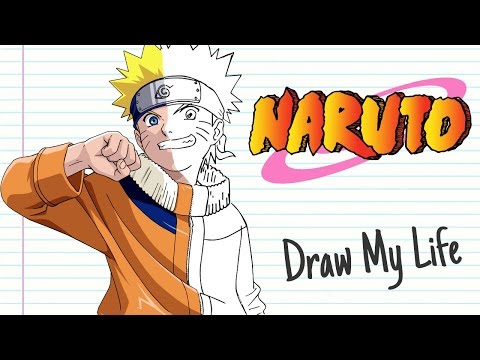
NARUTO 🍥🍥🍥 | Draw My Life - Duration: 4:47.

Naruto is a manga series written and illustrated by Masashi Kishimoto, published by the publishing

house Shueisha Inc.

Naruto Uzumaki is a teenage ninja who has the Nine Tails fox, Kyubi, inside.

12 years before the beginning of the story, this demon had attacked the Hidden Village

of the Leaf, and killed lots of people.

As a consequence, the leader of the village, the fourth Hokage , sacrified his life to

seal it inside Naruto when he was a newborn, and so stopped the massacre.

Because of this, Naruto suffered abuses during all his childhood, by those who considered

him the Kyubi itself.

As a solution for this, the Third Hokage, who had to retake power after the sacrifice

of the Fourth, issued a decree where he banned mentioning anything about the demon's attack,

and whoever did this, would be severely punished.

In the present times, Naruto graduates from the Ninja Academy.

He becomes friends with Sasuke Uchiha and Sakura Haruno, with whom he starts the TEAM

7, along with his sensei Kakashi Hatake.

While they learn new abilities and meet new characters during their missions, Naruto fights

for his dream to become the leader of his village, a Hokage, and be recognized as someone

important.

During the Chunin Exam, Orochimaru, one of the most sought for criminals, and some ninjas

from the Hidden Village of the Sand, they attack the Hidden Village of the Leaf.

Naruto stops the Íchibí, the 1 tail beast and its container, Gaara, before they destroy

the village.

Orochimaru kills the Third Hokage as an act of personal revenge.

Jiraiya one of the Legendary 3 Ninjas, who had trained Naruto for the exam, starts the

search for his old team mate, Tsúnadé, to name her Fifth Hokage.

During the search, it is revealed that Orochimaru wants to find Sasuke , to offer him the power

he so desires to kill his brother Itachi, responsible for having killed the whole clan.

Sasuke accepts and goes train with him, betraying his village and turning into a renegaded.

Sakura stays in the village training with Tsunade to be a ninja doctor and be able to

help her friends.

In the meantime, Naruto decides to leave his village along with Jiraiya, during 2 years

and a half.

His main goal is train and prepare to save Sasuke, and make it as the Hokage of the Hidden

Village of the Leaf.

Naruto's name comes from an ingredient in ramen, which he loves, made of fish based

pasta with a pink spiral in the center.

It is also the name of a Japanese city with natural rapids nearby.

Uzumaki means whirl wind, and the whole name altogether makes reference to the belief that,

when energy flows in a spiral movement, it is unstoppable.

The character never had any love or attention during his childhood.

This led to his wish to turn into the leader of his village, in order to have that recognition

and respect he never had.

In order to achieve this, Naruto has great determination, something we can tell by his

self confidence – he always completes every mission easily.

His strong competitiveness against Sasuke helps him move forward, be persistent and

become stronger and stronger, both physically and mentally.

. The manga, which has come to an end already,

is formed by 72 volumes.

There are two anime adaptations: Naruto and Naruto Shippuden, which continues the story

of the first one, and finished with its last episode in March 2017.

Naruto has also given room to several movies and OVAS, and tons of videogames.

As a continuation of the saga, Boruto: Naruto Next Generations was created, the manga first,

followed by the anime adaptation.

It tells the adventures and trainings of Boruto Uzumaki, Naruto's son.

Naruto is one of the most sold MANGA SERIES in history.

With an uncountable legion of fans, Naruto is one of the most important mangas in Japan.

It captures so many people because of its story, characters and exciting adventures.

Who's your favorite character??

For more infomation >> NARUTO 🍥🍥🍥 | Draw My Life - Duration: 4:47.

-------------------------------------------

Chicken Mandi Recipe Arabic style dish | Mandi recipe by Cooking with Asifa- - Duration: 8:37.

For more infomation >> Chicken Mandi Recipe Arabic style dish | Mandi recipe by Cooking with Asifa- - Duration: 8:37.

-------------------------------------------

Life Before Facebook # 2 - Duration: 0:16.

For more infomation >> Life Before Facebook # 2 - Duration: 0:16.

-------------------------------------------

How to start living a long healthy life by starting with something small - Duration: 1:43.

I've been working with someone the last while and a big thing that we were working

on, was trying to get them to execute something small and simple.

Traditionally they put a lot of time into doing a near-perfect job, getting it

exactly right before it's out there. So that concept of just doing something

small & simple, maybe even easy, compared to what they think it should be,

has been a hard thing to execute. This is myself included, I would rather

get something that's perfect than just put anything out there. It's

something I battled with to try and get around that mentality, The thing is

he's started this now and he's now executing these small workouts, these

short workouts which he thought didn't make any sense and had no value.

Now he's seeing the value in the workouts, he's making progress and because he's

executing these small things we can now do bigger things and get closer to what

is a more beneficial, more perfect workout. This was just a small thing I

just wanted to chat about, whether you spend time trying to do something near

perfect or something just getting it out there no matter what it is and it's that

balance between the two that will ultimately lead to your success in fitness

and probably success in other areas too. We'll chat soon

For more infomation >> How to start living a long healthy life by starting with something small - Duration: 1:43.

-------------------------------------------

Pets for Life launches in Corpus Christi - Duration: 2:09.

For more infomation >> Pets for Life launches in Corpus Christi - Duration: 2:09.

-------------------------------------------

The Rock's : $ 20 000 000 Car Collection - LIFESTYLE - Duration: 8:00.

The Rock's : $ 20 000 000 Car Collection

The Rock's : $ 20 000 000 Car Collection

For more infomation >> The Rock's : $ 20 000 000 Car Collection - LIFESTYLE - Duration: 8:00.

-------------------------------------------

Inspired To Transform Lives: Naira Khosrovian, Marketing and Communications Specialist - Duration: 0:16.

Your positivity inspires our calling,

brings happiness to those with spirits falling.

You inspire us to do more.

You inspire us to transform lives.

Adventist Health. Together inspired.

For more infomation >> Inspired To Transform Lives: Naira Khosrovian, Marketing and Communications Specialist - Duration: 0:16.

-------------------------------------------

Finding Your Life Purpose | The Ikigai Series 2 - Duration: 18:14.

Whoho hello and welcome everybody, today is the 2nd part of our series on

how to literally find your life purpose in a reasonable amount of time.

So if you haven't watched the first part of this series I recommend you do so, because

you're going to get a lot of important information that you will need for this very video.

So you probably remember that the model that I wanna talk about is

the amazing model of Ikigai which is this ancient Japanese concept for

anything between life purpose and the thing that gets you out of bed in the morning.

Your driver, your guiding star, literally that one thing that

everything in your life is about. There ARE a couple of disclaimers and you

will find them in the last video, the most important being: This is a big

concept, but let's chillax everyone. Because -you know- you don't have to find your entire life purpose

in 20 minutes.

But it's possible to have some sort of working hypothesis. So relax, if the insights

you're going to be getting the next five minutes aren't like "boom, boom, boom, boom, boom"

(if they are, congratulations), and

if they're not it doesn't mean that you're lost.

So here we go: From the last video you will remember that there are these four

things, the four purpose areas as I like to call them. And these are the

things that you love doing, the things that you're really really good at, the

stuff that world needs, and the stuff that you can be paid for. And there are

a couple of really, really interesting things and insights that can pop up,

if you look at the overlap of these exciting areas. These overlaps are the

things we're going to focus on today.

So the first overlap is passion and passion is where talent meets love.

It's where stuff that you're really good at meets the stuff that you love doing.

And I think what is so important to note here it is is that it's not actually

stuff you have to be paid for nor does it have to be particularly useful. Right?

So you know my ... one of my passions is... I love googling late at night

amazing and exciting venues where we can host our seminars in. You know, maybe even a

little bit useful but frankly -I mean- I spend so much time doing that but you

might argue whether that is really a very productive thing. And other things

-I don't know- I love old furniture, I'm really good at you know like distinguishing

different styles and -you know- actually styling other people's apartments. And I have this

massive pinterest wall of different antiques.

I don't know- I just have this massive passion for this. And... as said I just

want to highlight: Your passion does not have to be your job. That's one of

the little tiny insights that I love about this model, you know. It doesn't have to

be your job because per sé you don't have to be paid for it nor does it have to be

particularly useful.

If the passion is the overlap between your talents and the

things that you love doing, actually it kind of excludes by definition all the

stuff that you're mediocre at or really bad at. And why is that so interesting?

I'm just going to jump back to this whole "I-want-to-be-more-passionate-with-

my-career"-kind of questions just because we get those a lot. If you are asking

yourself "How passionate a I... like... is my job really my passion?" Think about the

degree to which things you're really good and ... the things you love

things that you love are represented in your daily life on your job. And think

about to which extent are there things that you are medicore at or bad at.

Or that I feel "less than l.o.v.e." for.

Two points here: 1) The things I just said are really good to

evaluate, but also -as said before- 2) your passion does not have to be your job.

So if it is -I mean- LUCKY YOU. And if it isn't -you know- have mercy.

Because I know for instance in my own story I am massively passionate about

what I do. But this had to grow over -I don't know- five or six years.

And I started the job I do today as hobby, as a hustling project. And what I'm seeing

is and it's far more important to really -you know- understand what your passion is

than to make it part of your career directly. Because one thing I can share

with you are with you for sure and that is: If you turn your passion into a job

but you don't have the the skillset and it's just not sufficiently

useful for other people, the amount of money/payment you might be

generated for this just might not meet your standards. And if the job you are

picking that is based on your passion does not provide for a life that you

love, you're going to start sabotaging your own job, your one passionate thing.

And that the last place where you want to be, because you will just start hating

that thing that's in this magic overlap between talent love. And that is such

a bad place to be. So yes, you can evaluate your job according to you how

passionate you really feel about it. And if it turns out that you are actually

not so passionate, have mercy. Have mercy and rather create space and time

for side projects, for hustling projects for great hobbies that will give you

that passion. And then later on you can still think about how to turn that

into a business or how do I include that more in my career. So that was a long

speech, but I just think included it because this is such a central point in the

questions that we are getting. So I hope it's gonna be valuable for you guys.

So the second amazing overlap is between what love and usefulness.

So between the things that you love doing stuff that the world needs. And we call it your "mission".

We call that your mission, because it's something that you just enjoy and it's

needed. And that's why you do it -you know- it doesn't have to bring you money,

you don't even have to be very good at it. So a very common example is people

being a parent. Probably -you know- everybody makes crazy mistakes as

parents. We've all been wounded by our parent by our parents. And we as parents

will wound our children. It's probably the hardest in the world.

Nevertheless -you know- it's ... once you have your child, it's just your mission and

you do it no matter what. For other people and I just remember a super,

super cool coaching client that we had. She is someone who had this mission to

build this mentoring program for young people that are neither in education,

employment or training or in any sort of structure provided by the government. And

you know: Was she the very best person to build this organization? We don't know.

But she loved mentoring, and she loved the idea of a very big

organization. And that's what she's doing. Is she being be paid for it? Well... not yet.

But that's what I'm saying, right? And for me personally for instance, I guess you know

my biggest mission is to support the the International heads of all these

international NGOs that we've been working with. If you know my

own story you will know that I have been helped so much by these organisations.

And they have this massively big place in my heart. You know, in the past we gave

we gave a way up to like 40 percent of our revenues as scholarships for people

from the nonprofit sector. So hey, are we the best people to ever help them?

Idon't even know. Are we making money from this? Definitely not!

Is it needed? Yes! And do we love doing it? Yes! So...

There's one really great thing about this whole mission... little ... overlap... kind of.

And that is: It is actually impossible to fail in your mission. And what do I mean by that?

Someone might take away your stage. You know, The Arc might fail as an

organization or the mentoring organization of our client, of my friend to

be fully honest might also fail. Right? You might actually fail as a parent to a

pretty high degree. But doesn't mean that you cannot choose to pursue that

path? No, it doesn't. You will still be that person to who being a parent is

massively, to who mentoring these kids is

massively important. And I will probably never stop -you know- doing everything I

can to support these international NGO. So that is maybe the one cool thing to

give us peace of mind: If you know what your mission is, it is impossible to

fail it. Because no matter how dire the context is that you are in

you always are probably going to have a choice to go on this direction, or

this other action... And knowing where your mission is will point you towards the right one.

So here we go the next overlap and that the one between talent and profit, i.e. the things that you

are really really good at and the stuff that you can be paid for. Now... if you're

here to get rich quickly, this is probably the box that you want to have a

lot of really smart things in, because yeah I mean obviously being very good at

something that you can be paid for for really well yeah might just end up being

massively beneficial for your bank account.

The challenge for most people though is that at least by definition your

profession does not have to be something that you love. And it might also be

something that is not particularly useful to the world. Having said that

though remember how we said earlier that, if -for instance- the passion project that

you're having or that passion business that you're thinking of building does

not provide you the lifestyle that you want - if that's the case then you would

actually start sabotaging that very own beautiful project of yours? In order to

actually prevent that the whole "profession" box is really the box to optimize.

So more practically, what am I talking about? If you are

knowing already that you have the side hobby, the side hustling project that

you really would love to develop, but you are worried that it will not pay you enough,

relax about it. Just be fine with the fact to have it a little bit

separate. You know, you don't have to move towards the center of this Ikigai

right away or in one year. You have your entire life to do it and a lot of

you a little never. So relax about it. And just think about the ways how you

can -you know- have a profession and how you can sort of balance this

with everything that you put under the passion overlap "shlash" corner, right?

So, I mean even -you know- at The Arc there's so many people who are pulling off their

own massively amazing project which fulfills them which is absolutely

fantastic for them. But at the same time they're working as freelancers to finance

their living. And -you know- sometimes this is looked down upon a little bit in a

sense that... yeah... but you have to you know quit your job and throw yourself in there

fully. But I think that's a little bit of an unfair judgment because

for me, I personally think it's pretty daring to actually pursue

something of which you don't know yet how you are going to make money with it.

So if you are really very self-critical around

"oh-my-passion-just-isn't-worth-being-funded-or-being-paid-for" You know, relax!

Oftentimes something will pop up over time and... maybe there's just no

market for this. And that's fine. We also use the "profession box" or overlap or

whatever you want to call it, as a counterweight. If you have for instance a passion that

you feel, you struggle to make money with.

So the last magic overlap is "vocation"

where usefulness meets profitability or profit. So where

what world needs meets what you can be paid for. For a lot of people it's

really hard to get the heads around between the difference of "vocation" and

"profession". How are these things even different? [pause] Weird! And I think

I can explain it best using a small example from my own personal life.

Because I guess for most people it's easy to identify their profession,

the stuff that they're good at and that they can be paid for. Vocation is a

little bit harder sometimes and maybe you don't even think of anything in

particular right now or maybe what you were thinking of is pretty hypothetical.

But here is the personal example: So I have been working with someone who is

actually a former teacher and who has this crazy social enterprise. And he has

all these ideas around how to lower school absentism. So basically how to

lower the number of students and pupils that are missing from school, because

they're like... for a lot of reasons. So what he came up with it was actually a

software that would monitor these absentisms where people ore actually in

that case the teachers would have to log. Now is he really loving IT?

He's a teacher I can tell you he's not completely against it, but it's definitely

not the biggest love of his life. And is he massively good at programming

IT systems? Well for sure not. And he basically had to hire a programmer. But is it something that

the world needs? And something he can be paid for? Definitely yes! So that

particular business for instance is a good case of showing what a "vocation" means.

I hope this made it clear for you. So let's start off and get down a couple of

things for that.

So that's it already. That's sort of the end of the second

episode of the series. And I am going to challenge you to just go back to your first

Ikigai, those magic 15 words or mantra that you have come up with after

the first video. And just look at it again and see: Does it still make sense?

What's the overlap between all the things that now you've come up with

and things that you've already come up with out the first video? Just iterate

and see what happens. Maybe -you know- you are a little scared or would be

like "Wow, how will I ever get this done?" or like "thanks for that" [frustrated], maybe you are even

a bit disappointed. The one thing I can tell you it: There's an actual risk of

you just putting that piece of paper aside and not doing anything.

The risk is real. We know this because, hey, it's very easy to

not follow through upon the stuff you really should be following through. But

-you know- they're surely out there are a lot of people who don't want to part

with us, but if you're one of those people who DO want support with us, dare to

contact us for a coffee chat. It's a 45 to 60 minutes free coaching where we will

find out if The Arc is really for you, whether or not we can support you. And

yeah what the next steps could be. So if that is something that excites you

dare to click on the link below. Check out the website, we are

organising bootcamps, retreats, coachings, amazing events across Europe

and yeah it's a super open community... whose people are really just

waiting -you know- for you to be welcomed. Don't be scared, it's really a hell of a lot of fun.

And see you soon!

For more infomation >> Finding Your Life Purpose | The Ikigai Series 2 - Duration: 18:14.

-------------------------------------------

Diffusion & Life - Duration: 1:07.

What's this stuff? Some cereal. It's supposed to be good for you.

It's supposed to be good for you. Did you try it? I'm not gonna try it, you try it. I'm not gonna try it. Let's get Mikey! Yeah.

He won't eat it. He hates everything. He likes it!! Hey, Mikey!

When you bring Life home, don't tell the kids it's one of those nutritional cereals you've been trying to get them to eat.

You're the only one who has to know

No one ever outgrows the terrific taste of Life cereal. No wonder Mikeys of all ages like it. I like it!

For more infomation >> Diffusion & Life - Duration: 1:07.

-------------------------------------------

Inspired to Transform Lives: Sheri Dungan, RN - Duration: 0:16.

For more infomation >> Inspired to Transform Lives: Sheri Dungan, RN - Duration: 0:16.

-------------------------------------------

Holiday Life Hacks - Tangled Lights, A Fuller Christmas Tree, Elf Donuts - Duration: 3:32.

OK SO DOES

ANY OF THIS SOUND FAMILIAR

LIGHTS THAT YOU JUST HAVE NO

PATIENCE FOR BECAUSE THEY ARE

A TANGLED MESS OR HOW ABOUT

ROLES ARE WRAPPING PAPER I

DON'T HAVE TIME FOR IT THIS

HOLIDAY SEASON WHICH IS WHY

I'M HERE TO THE RESCUE SO WE

HAVE A COUPLE OF LATEX TODAY

THAT WE ARE GOING TO TURN

THIS MESS INTO ABSOLUTELY

BEAUTIFUL CREATION OK SO

FIRST OFF LET'S GET RID OF

THIS WRAPPING PAPER YOU

ALWAYS LOOK FOR A PLACE TO

STORE IT RIGHT WHY NOT A

TRENDY LITTLE WASTE PAPER OK

CUTTING MERRILL'S A PAPER IN

THERE AND THIS WILL TALK

NEATLY INTO YOUR CLOSET

BEHIND THE DOOR YOU CAN

ALWAYS HAVE A HANDY WHEN

YOU'RE DOING A LITTLE BIT

TRAPPING YOU COULD JUST HAVE

IT IN ONE PLACE AND PROBABLY

THE HIGHER THE WASTEBASKET

BIG HEAVY ROLES RIGHT EXACTLY

GOOD IDEA OK ONE DOWN THESE

LIGHTS ANNOYING THERE ARE

ALWAYS TANGLED UP BIRD'S NEST

EVERY TIME YOU GET THE JOB SO

IF HE FINALLY MANAGED TO GET

THEM UNRAVELED AND YOU KNOW

HOW TO TRAVEL THEM BACK UP

WEALTH THE BEST THING THAT

YOU'VE GOT A HUNDRED OF THESE

ANYWAY 5000 1000 YOU JUST

BASICALLY WRAP YOUR LIGHTS

AROUND YOUR COAT HANGER AND

YOU HAVE YOUR PLUG AND AND

THIS LITTLE THIS LITTLE HOOK

AREA NIE THAT YOUR LIGHTS ARE

QUICKLY STORED YOU CAN HANG

HIM IN THE GARAGE YOU CAN YOU

CAN PUT THEM IN THE SAME

CLAUSE THAT YOU JUST PUT YOUR

WRAPPING PAPER RIGHT RIGHT

THAT'S A GREAT IDEA OF THESE

THINGS WERE BAD YEAH SOMEONE

TANGLED THESE UP REAL GOOD

DUTERTE WILL HAVE A WORD WITH

THEM OK SO IT'S TAKEN CARE OF

NUMBER TWO ALL RIGHT NOW

THE THIRD TRICK YOU'RE

STANDING NEXT TO A CHRISTMAS

TREE LITTLE BEAR I LOVE

THE CHRISTMAS TREE BUT IT

NEEDS AND THAT'S WHERE I

THINK GARLAND WILL FIT VERY

WELL. SO IF YOU HAVE AN EMPTY

SPOTLIGHT IT LOOKS PRETTY

BEAR RIGHT AROUND THE MIDDLE

YOU CAN ACTUALLY USE GARLAND

TO FILL YOUR CHRISTMAS TREE

TO MAKE IT LOOK FULLER TO

MAKE IT MORE ALIVE HE GETS A

GREAT IDEA AND IF YOU'RE GOOD

ENOUGH WHICH IT LOOKS LIKE

YOU ARE YOU WON'T EVEN NOTICE

IT? THE END OF THE DAY

BECAUSE IT'S FILLED IT LOOKS

NATURAL AND OF COURSE IF YOU

HAVE A NATURAL TREAT YOU DO

WANT TO MAKE SURE THAT YOU'RE

KEEPING IT WATERED AND YOU

WANT A KIND OF COLOR MATT IT

TO THAT GARLAND AND YOU KNOW

THAT SOME OF THIS STUFF AND

THAT MAKES IT LOOK EVEN MORE

FALL YEAH YEAH. LIFE HACK

POINT TO 2.0 RIGHT THERE OK

THERE'S OUT FROM THE SHOW YOU

HAVE AN ELF ON THE SHELF IF

YOU HAVE KIDS AT HOME YOU

PROBABLY KNOW EXACTLY WHO

THIS LITTLE GUY WELL WE FOUND

A FUN CRAFT THAT WILL BE A

NICE WE'RE TALKING ELF

DOUGHNUTS NOW WE HAVE A

COUPLE OF CHEERIOS PROBABLY

GOT A BOX OF THESE IN YOUR

PANTRY OR SOMETHING OR OTHER

THEY'RE VERY CHEAP AT

THE STORE BUT IF YOU TAKE

CHEERIOS AND YOU PAINT THEM

BROWN WITH A LITTLE OR

CHOCOLATE ICING AS I LIKE TO

CALL THEM YEAH. EVENTUALLY

WITH VERY LITTLE EFFORT WITH

WASHABLE PAINT AND A FUN TIME

WITH THE KIDS YOU CAN MAKE

DOUGHNUT YOU CAN MAKE DONUTS

FOR BUDDY OR JOHN OR WHATEVER

YOUR OWN GERTRUDE OR WHATEVER

YOU GOT TO USE THAT

PAINTBRUSH YEAH. OH YOU KNOW

WHY DID YOU DO WANT TO USE

CHOCOLATE ICING THAT IF YOU

THINK YOUR KIDS ARE GOING TO

EAT THEM THAT MIGHT BE A

BETTER IDEA YES SO YEAH

FROSTING PEANUT BUTTER IS

ALSO A REALLY GOOD ONE IF

YOU'RE LOOKING TO MAKE DOUBLE

DONUTS PAPAGENO KEEP THEM

BUSY WE WENT THROUGH LIKE

THREE OR FOUR LIFE TAX FOR